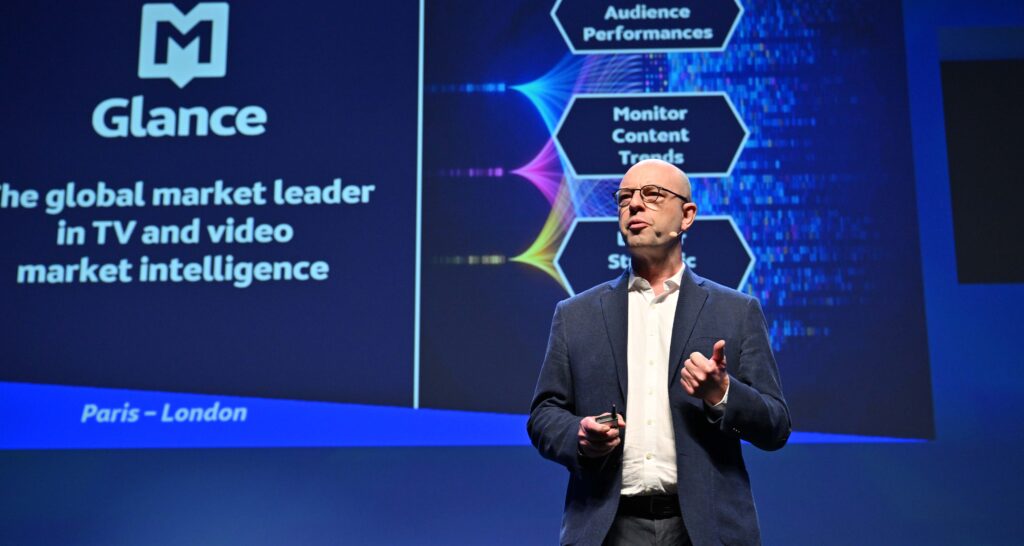
Global television consumption is undergoing a structural transformation, with linear viewing time continuing to decrease across Western countries, typically averaging between two hours and two hours and 15 minutes per day. This data was presented by market observer Glance, which traditionally opens the MIPCOM conference program.
The analysis confirms that streaming is gaining ground against linear television. The United States serves as the primary example of this shift: linear TV’s market share dropped from 63% to 41% in five years. In May, streaming services for the first time surpassed linear TV viewership numbers in the U.S.. Glance noted similar trends in the UK, Australia, Brazil, and Poland.
Digital Growth and Monetization
Traditional broadcasters are capitalizing on the streaming trend through their own digital offerings (BVoD). The BBC iPlayer, for example, captures twice the share of 18- to 30-year-olds compared to the BBC’s linear output in the UK.
BVoD offers are also contributing to monetization for commercial TV groups. In France, TF1+ reported a 31% revenue increase, generating €90 million in advertising revenue, while M6+ brought in €58 million. Together, these BVoD services now account for 12% of the advertising revenue for both TV groups.
The global streaming market is led by Netflix in the SVoD space, maintaining a consistent market share across all analyzed countries. YouTube shows significant momentum, with its market share ranging from 9% to 20% globally, hitting a record high in Brazil. YouTube viewing is heavily skewed toward children’s content in the UK, where seven of the top ten most-watched channels are kids’ content. AVoD providers like Roku, Peacock, Pluto TV, and Tubi are now established as a distinct market category in the U.S..
Viewer Behavior and Market Complexity
The Glance presentation also addressed audience behavior, noting that consumption is concentrated among heavy users. The most active 25% of Netflix users generate 65% of the platform’s consumption.
The market is characterized by increasing complexity, defined by Hyper-Distribution and «Coopetition»—cooperation among competitors. This heightened competition drives complicated distribution strategies. Examples of this «Coopetition» include Fox One’s deal with Prime Video in the U.S. and Fuji Television’s exclusive agreement with YouTube in Japan. The complexity is especially evident in U.S. sports rights, which are divided across traditional channels, Premium SVoD, FAST channels, and aggregators.