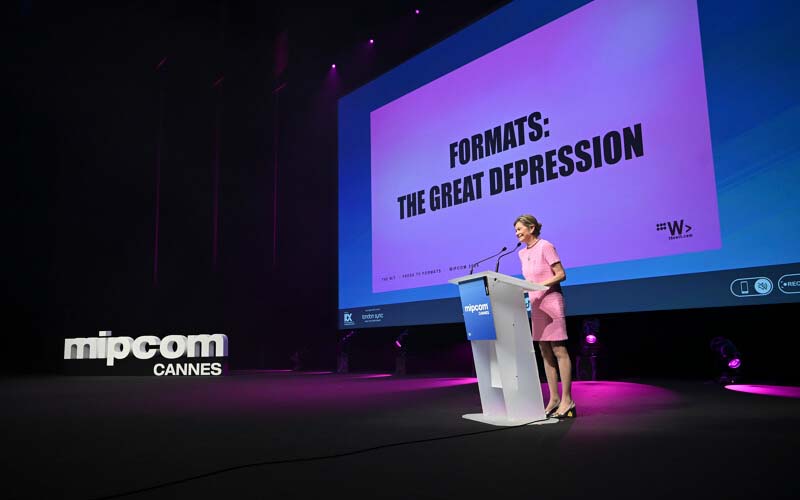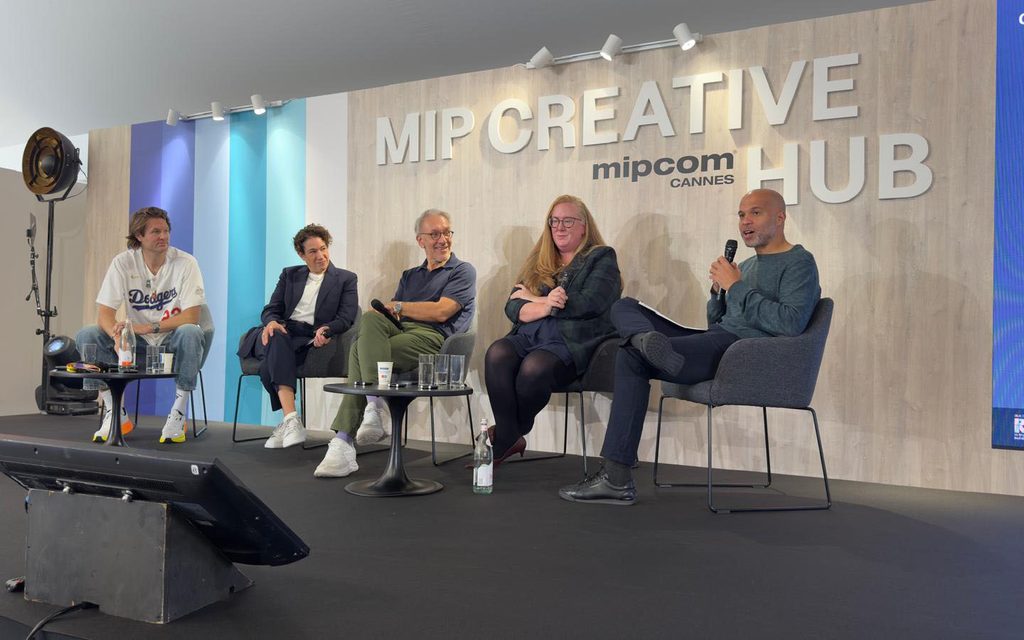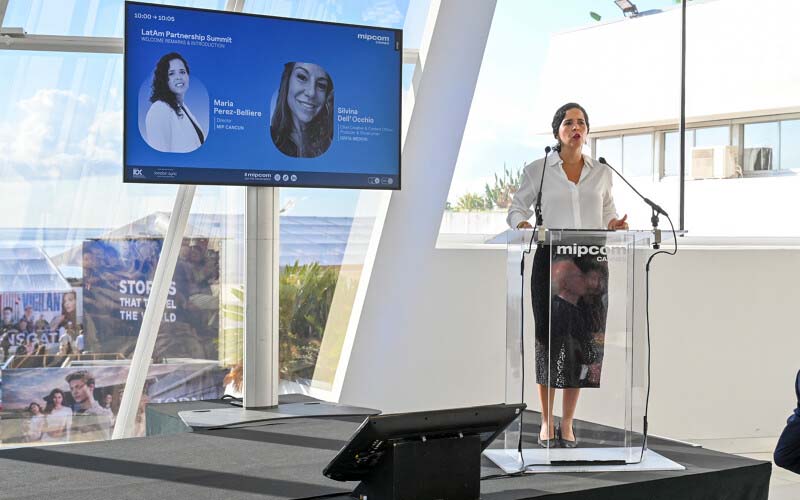
At the TIFFCOM 2025, Japanese broadcasting giant Nippon TV made its ambitions unequivocally clear. Under the bold slogan “Gear up, go global” and an internal rallying cry of “Nippon TV Kaikoku” (Nippon TV Open Nation), the company announced an aggressive strategy to quintuple its overseas revenue from approximately ¥20 billion in FY2024 to ¥100 billion by 2033.
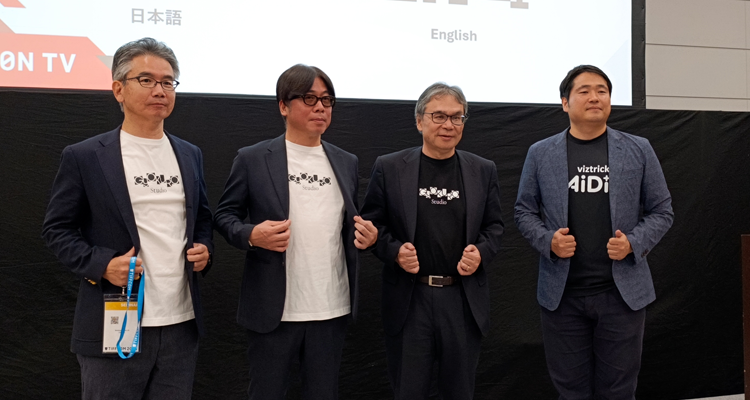
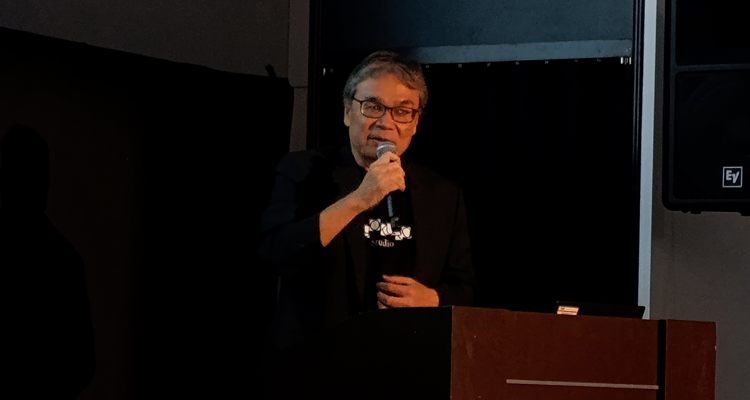
This ambitious target was unveiled by Keiichi Sawa, Board Director and Senior Executive Operating Officer, who emphasized a multi-pronged approach that moves beyond traditional content sales to embrace global co-production, strategic partnerships, and the international monetization of its proprietary AI technology.
A Three-Pronged Content Program
Nippon TV’s global strategy rests on diversifying and deepening its content footprint worldwide. The plan includes:
Film: Global theatrical and streaming releases for major titles, starting with the upcoming worldwide release of Mamoru Hosoda’s new film, The Howl’s Moving Castle.
Drama: A dual approach of selling existing dramas to global streamers and actively developing original series for these platforms, alongside aggressively licensing its hit formats for international remakes.
Anime: Evolving from simple program sales to comprehensive IP management, focusing on merchandise, collaborations, and fanbase expansion.
Events & Stage: Capitalizing on the success of long-running stage productions like My Neighbour Totoro in London, with plans for more exhibitions and stage performances.
Introducing Gyokuro Studio: A New Hub for Global Formats
A cornerstone of this strategy is the launch of Gyokuro Studio, a production unit dedicated to developing unscripted entertainment formats for the international market. The name, inspired by the high-grade Japanese tea Gyokuro, reflects its mission to deliver premium Japanese content to the world.
Led by Ken Akiyama, the studio aims to «co-create» global hits by partnering with top-tier in-house and external creators, production companies, and clients. It will handle the entire process—from rights management and contracts to sales—in an integrated manner.
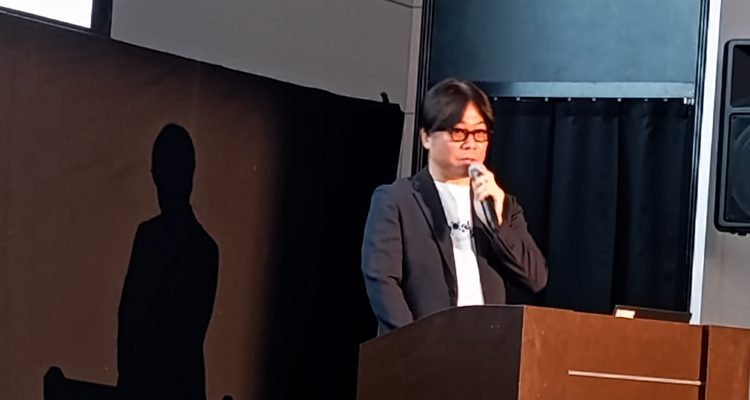
“We are not just focusing on ratings anymore. Our clear goal is to create content that sells globally,” Akiyama stated. The studio has three core pillars:
1. Terrestrial-Broadcast-Integrated Formats: Leveraging Nippon TV’s broadcast assets to develop formats for global audiences, with a target of 10 new formats per year. A key innovation is an incentive scheme that shares profits with partner production companies after format sales recoup costs.
2. Originals for Global Streamers: Actively developing original programming for platforms like Netflix, Amazon Prime Video, and Disney+. Akiyama highlighted a shift towards byname commissioning, where platforms request specific creators, positioning the network’s talent as valuable IP in themselves.
3. Branded & Digital-First Content: Creating bespoke entertainment that aligns with global brands’ marketing and strategic goals, often designed for digital-first distribution on social media, YouTube, and brand-owned channels.
The studio has already launched its first two formats, Mega Catch and Secret Relatives, unveiled at MIPCOM, and is strengthening its North American presence through a new LA business hub and a strategic partnership with Canadian studio Blue Ant Studios.
AiDi: The AI Powerhouse Born from Broadcast
Perhaps the most surprising element of Nippon TV’s global push is AiDi, an AI system developed in-house that is now attracting significant international interest. Originally conceived as an Assistant Director to alleviate production burdens, its name evolved to represent «AI» combined with the «D» from various production roles (Director, Development).

Takayuki Shinoda of the Global Strategy Headquarters presented AiDi as a versatile, laptop-based solution that operates without an internet connection, ensuring security and portability. Its capabilities, honed through hundreds of use cases in live broadcasting, are vast:
Real-time Translation & Analysis: Instantly translating on-screen English graphics to Japanese, famously used during the Tokyo Olympics.
Automated Production: AiDi can autonomously operate cameras, perform video switching, integrate CG, and create highlights and replays. The company showcased a fully automated real-time baseball broadcast produced entirely by AI, specially designed for low cost sports events.
Advanced Object & Facial Recognition: Tracking players and balls, estimating speed and distance, and automating scoreboard graphic generation. This technology is also used in entertainment formats, such as the comedy show Funny Face Spy, where contestants must distort their features to fool real-time facial recognition cameras.
Vertical Video Creation: Automatically cropping and tracking subjects in real-time for social-media-friendly vertical video outputs.
Expanding Beyond Broadcasting
AiDi’s applications are rapidly expanding beyond the media industry. Nippon TV is now fielding hundreds of inquiries from other sectors for use cases including: Pedestrian flow analysis for events and commercial facilities; Building access management via facial recognition; Traffic volume analysis and dangerous driving detection on highways; Monitoring mask-wearing rates and detecting no-entry zones on construction sites.
“We started with the goal of streamlining content creation and enabling dynamic expression,” Shinoda explained. “But by combining our pre-developed AI modules, we can now offer cost-effective solutions for a wide range of industries, and the interest from overseas is growing rapidly.”
A Collaborative Future
Both Sawa and Akiyama stressed that partnerships are essential to achieving their lofty goals. This involves fostering a global mindset within the company, expanding hiring of experienced professionals, and deepening alliances with domestic and international companies.