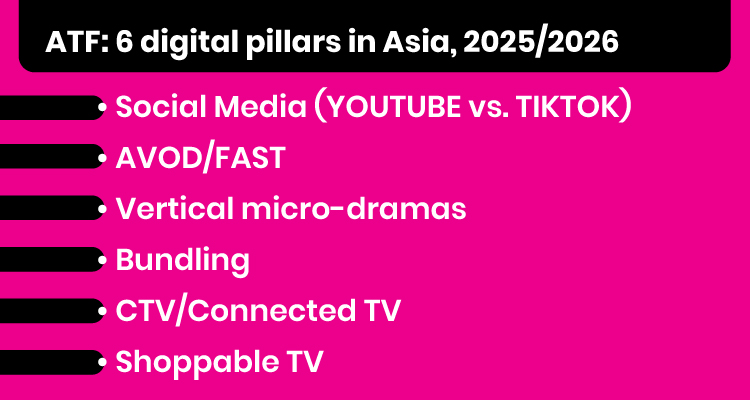
This new edition of the Asia TV Forum (ATF) in Singapore promises to be very interesting: there are new digital trends exploding from Asia to the world, so ATF is a great place to be present and deal with the vanguard of them. The two main ones are Social Media, with Tiktok challenging YouTube the future of video playing; and the vertical micro-dramas, with now Reelshort, DramaBox, COL, reaching global audiences. Also, FAST/AVOD, Bundling, CTV and Shoppable TV complete the map. Asia rules the global market.
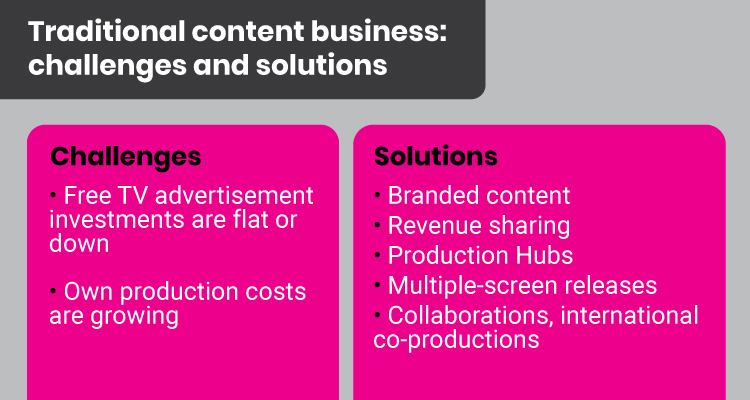
At MIPCOM last October, it could be proved that these trends are the main thing of the new digital environment that reigns content business. Of course, for most of the traditional content market, business continues as usual, based on finished programming, formats and production projects. The digital issues are mostly science fiction for them. Their goal is to keep old business working, when TV advertisements are going down and own production costs are increasing progressively.
The solutions for them are revenue sharing, branded content, multiple-screen releases and all type of collaborations: development, production, distribution, etc. The high-end of traditional business is to develop co-productions among different countries and regions, nowadays. Asia is more open to international ventures inside, and the big Asian players —especially from Japan, Korea and India, but also now from China, Malaysia, Singapore, The Philippines, Indonesia and many countries— have now a full international profile. All of these continue at this ATF, as we’ll see them during the week with our daily newsletters.
But the new digital ventures are the ones that can kick the table, change the equation of business. That’s why they are so important. During this ATF edition, we develop separated reports for all of these trends, but here it is relevant to stress the main keys each. The two ‘elder’ ones are the FAST/AVOD ventures, which have provided the last years many opportunities to traditional players to move their catalogs generating new incomes; and YouTube of course, which app was celebrating 20 years at MIPCOM, and ten years of YouTube Kids app. To develop fresh and growing incomes in YouTube, is the main current challenge for content industry members today. What is new, what is different?
Six digital pillars: what it is important to know
• Social media: it is led globally by YouTube as the great video player, plus then Meta (Whatsapp, Facebook) X, Tiktok, Instagram, Spotify, Snapchat, Linkedin, and so many others. The new thing is that Tiktok and Instagram are gaining more and more portions of the digital advertisement pie, so for the first time they propose a big dispute for the supremacy of digital video consumption. That’s why YouTube for the first time had strong presence at Mipcom and other content events, as MIP Cancun in Mexico and ATF. The video titan wants to assure more allies and more business to its platform, now that is not alone on the discussion.
How will be the future of video playing? Proactive searching for a video on the TV or computer sets (YouTube) or passive rolling the short video wheel on the cell phone (Tiktok)?. Of course, both ways will continue, but the shares will define millions of developments (and dollars). In fact, the dispute must be understood in a multiple-business scenario: in videos to see on TV or computer, YouTube has no rivals. For mobile ecommerce, Tiktok wins. And where they are competing nowadays are the microdramas. Youtube arrived first, its technology is ready. But the most successful monetization of microdramas so far is transactional, ‘pay per use’, as with the TVOD games, the Tiktok mode. So, the answer is open…
• In AVOD/FAST, the new thing is that the Pay TV operators are starting to integrate FAST channels in their offering, as it has happened with 3-4 deals in Europe announced during MIPCOM. Also, OTTera, one of its global providers, is offering for the first time FAST managed services, which provide content owners packs of programming, AI tools, distribution and monetization, to guarantee a good performance.
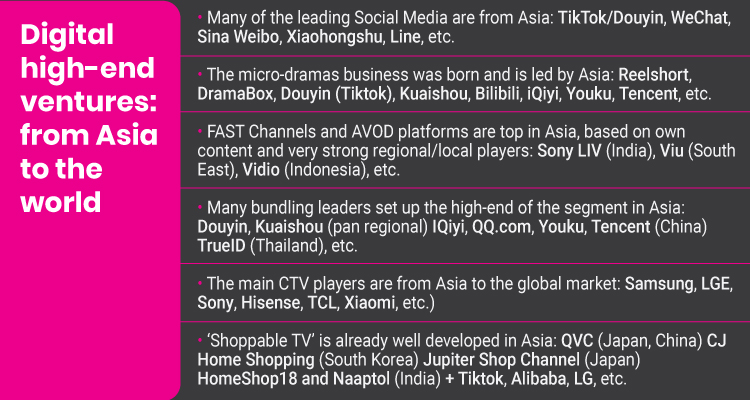
• In micro-series, it is important to stress the basics: the boom was born in China and they are called ’vertical’ because they are thought for the cell phone, when TV and computer sets have horizontal video format. The main Asian micro-dramas platforms are Douyin, Kuaishou and Bilibili, which produce and host micro-dramas, and dedicated platforms as iQiyi and Youku. Globally, today Reelshort and DramaBox are the main known apps for the genre. Micro-dramas are the opportunity to reach young targets and to generate massive business through telcos and other operators, with millions of views each content. With current strong original production, the challenge is the delivery, not to live the same cross-roads than SVOD platforms, to get a mid-point between concentration and extreme fragmentation.
• Bundling: according to UK consulting company OMDIA, the aggregation segment —to generate packs of various SVOD per very advantageous costs— will take a third part of the SVOD business in USA in 2029. This shows its strength, though in many regions bundling is just starting. In Asia, there are very strong aggregators —see the attached image: Douyin, Kuaishou, iQiyi, etc— and there are many regional OTTs which are as important as the global ones, local product is top, too, so it is a very special market where bundling is ideal to take real advantages. We will see many very competitive bundlers in the years to come.
• In CTV (Connected TV through smart TV sets) the leading companies Samsung, LG and many others come from Asia, and they are getting as many subscribers in USA than TiVO or the main PayTV operators. The key of the segment is to optimize in one, many steps of the content chain, as the SVODs that want to be hubs of entertainment and the bundlers giving special packages. Just buying a smart TV, the user would have everything included, with the capacity of evolving easily in the future, with new apps as ‘Shoppable TV’, etc.
• Justly, ‘Shoppable TV’ comes very strong in the mature markets. In Asia there are vanguard players, as QVC and CJ Home Shopping, among others —see the attached image. It means to develop user interfaces to generate retail/ecommerce consume direct from the TV screen, as an extra service for the TV viewers who are eager to consuming the products they watch: the shirt of the leading actor, the swearing of the football team when it is winning, etc. Also, independent products that nothing to do with screen but are there available. It is expected to take an important part of current ecommerce in the future.
With all of these, what?
These are concrete opportunities to way out from lowing traditional scenario and to pick up the new media waves and incomes. Here we are not talking about promises, they are facts growing worldwide, available to be taken by smarter or sooner players. One of the main stops for development, is the lack of confidence. But as soon as one dedicates time and efforts to them, results begin to appear. Asia is a permanent example of early and high-end initiatives that evolve well.
It is interesting the tip of the managed services. In other businesses as IT/computers, they are a key for progress because they assure good performance and results, based on a monthly fee and SLA (Service level agreement) commitments. Apart from OTTera in FAST/AVOD, YouTube big partners as VA Media (Australia, with global structure) provide ‘YouTube managers services’, to guarantee monetization in YouTube ventures. They are new options that if they extend, will help to accelerate evolution.
Nicolás Smirnoff