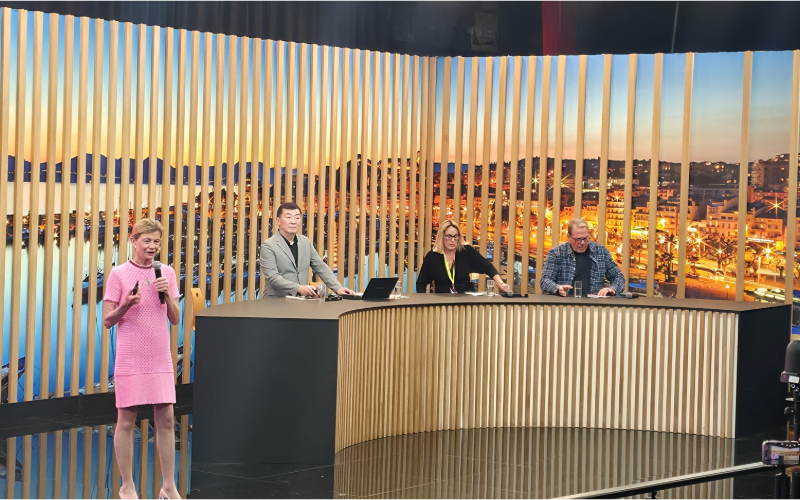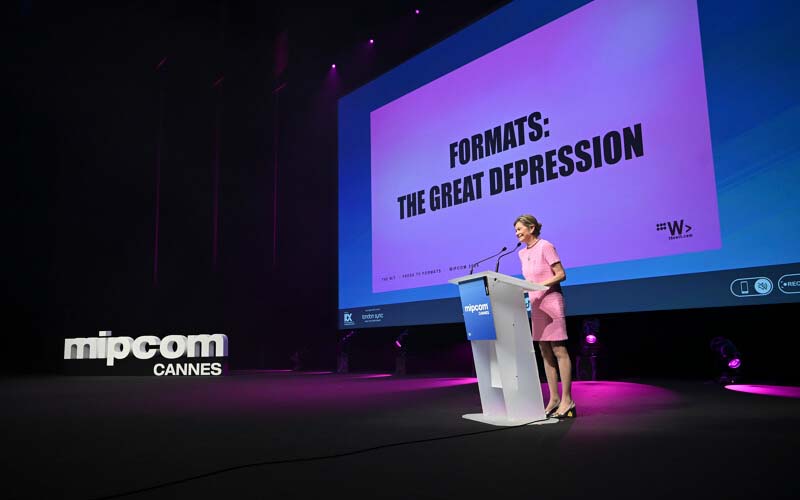
The audiovisual landscape is undergoing an unprecedented transformation, marked by the growing interdependence between traditional television networks and streaming platforms. This was the central conclusion of Frédéric Vaulpré, SVP of the research firm Glance, during his presentation on the opening day of MIP London.
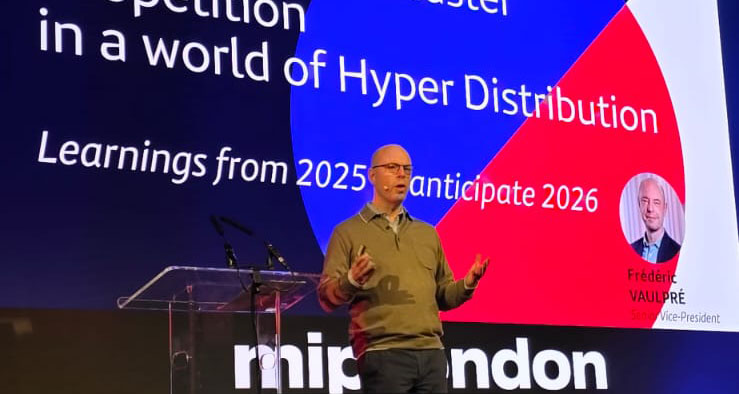
Through a comprehensive analysis of 2025 consumption data, Vaulpré outlined the trends that will shape the industry in 2026, highlighting a widespread decline in linear television viewing in favor of an emerging model he defined as «hyper-distribution.»
The linear decline and streaming’s dominance
The data presented leaves little room for doubt: linear TV consumption is ‘very challenged’ globally. In Northern Europe, daily viewing time has dropped to levels similar to North America, hovering around two hours in countries like the UK and the Netherlands. In Southern Europe, Italy maintains slightly higher viewing figures, with 3 hours and 27 minutes daily.
The United States serves as a clear ‘turning point’. In just four years, American linear consumption fell from 63% to 44%. The hardest hit have been cable channels, with historic networks like AMC, E! Entertainment, and Lifetime falling below a 1% audience share. Last May, streaming officially surpassed linear television in the U.S.
However, major broadcast networks like NBC and CBS are ‘resisting quite well’, maintaining a consistent combined share of 23%.
YouTube and Netflix: The kings of the market
Within the digital ecosystem, two platforms remain the undisputed leaders: YouTube and Netflix. ‘When you look at Netflix, it’s very consistent from one country to the other, its market share is between 6% and 9%’, Vaulpré explained.
YouTube, meanwhile, presents even more dynamic figures. In the UK, the Google-owned platform reaches a unique 80% of the population monthly. When focusing on heavy viewers, their average consumption sits at a staggering 5 hours and 8 minutes daily.
Interestingly, both platforms share an identical consumption pattern: 25% of their audience (the heavy viewers) consume between 65% (Netflix) and 75% (YouTube) of the total hours watched. Furthermore, YouTube dominates among younger demographics, while Netflix’s audience profile ‘is a very similar pattern to TV viewers’.
The Era of ‘hyper-distribution’
The response of traditional networks to this fragmentation has been ‘hyper-distribution’, a strategy that, according to Glance, has unfolded in two distinct phases:
- Broadcaster VOD (BVOD): The first phase involved networks launching their own digital platforms (like BBC iPlayer or TF1+). This strategy is already paying off: BVOD now represents nearly a quarter of the BBC‘s total consumption, attracting an audience that is 10 years younger on average. Monetization is also growing; France’s TF1+ and M6 already generate roughly 12% of their revenues through digital advertising on these platforms.
- Alliances with Global Platforms: The second, more recent phase involves massive alliances between historical rivals. ‘There is not a single day where you don’t hear or read about a new agreement between a broadcaster and a platform’, Vaulpré noted, citing deals such as NBC and Canal+ partnering with Netflix in Africa, or M6 signing with Prime Video in France.
- YouTube has become a key partner in this phase. Broadcasters like Japan’s Fuji TV, France’s RMC, and UK giants BBC and ITV have launched ambitious distribution strategies on the video platform. ITV, for instance, launched its digital label «Zoo55» in January 2025 to manage more than 140 YouTube channels and leverage its massive catalog of 90,000 hours of content.
The ‘Crossover’: streaming and broadcast merge
The result of this hyper-distribution is a market where linear television content actually dominates streaming viewing. According to an aggregated analysis of the top three platforms across six countries, the top three most-watched programs are exclusively legacy TV shows.
This has generated a dual phenomenon:
- The «Streamification» of Broadcasters: TV networks are acquiring exclusive content for their digital platforms (like TF1 buying Ghosts) and creating streaming-first spin-offs of major entertainment formats.
- The «Broadcastification» of Streamers: Digital platforms are adopting linear models. Disney+, for example, has introduced 24/7 live channels, including ABC News Live and a dedicated Simpsons channel—a strategy that Netflix and HBO Max have also begun to explore over the last 18 months.
- ‘We are really in an intense quest for hyper-distribution’, Vaulpré concluded, making it clear that in 2026, survival in the television business will depend on being present on every possible screen.