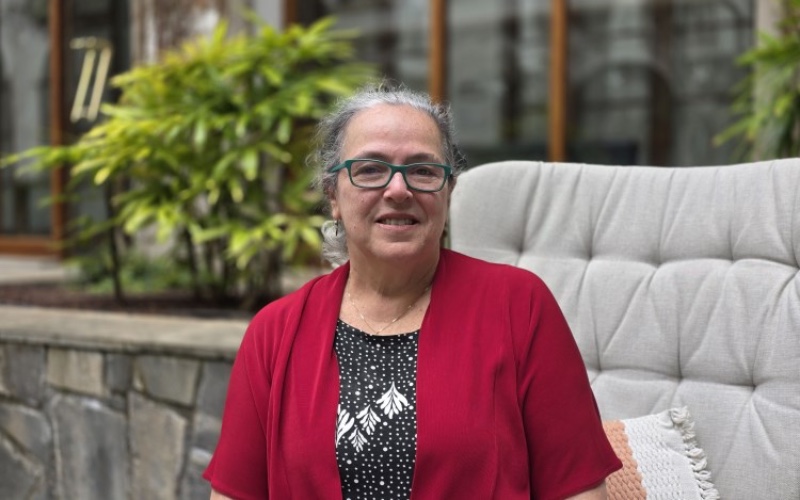
In a recent interview with Prensario, Beth Carmona, VP of Content and Programming at Brazil’s TV Cultura, discussed the current state of public television and the restructuring strategies for the Brazilian broadcaster’s children’s grid.
The executive, who is also the founder of the NGO Midiativa and the comKids festival, highlighted the need to strengthen ties among public broadcasters worldwide. She emphasized the importance of coordinating efforts with networks such as Portugal’s RTP and Spain’s RTVE, alongside Latin American peers, to boost co-productions and project exchanges that ensure the ongoing relevance of state-owned media.
Carmona’s return to the network’s vice presidency eight months ago presents a vastly different landscape compared to her previous tenure in the 1990s. During that era, she led the creation of a children’s block that spanned eight hours daily, successfully positioning preschool content in prime-time free-to-air television with high ratings. ‘Returning to my duties today, after working with private networks like Discovery Kids and Disney, I found a grid that allocates ten hours to children’s programming’, Carmona noted. ‘This volume of airtime requires a strategic overhaul to face a media ecosystem defined by audience dispersion across multiple screens and digital platforms’.
TV Cultura’s current operational model to supply this programming block combines three lines of action. First, the network serves as a key distribution window for domestic Brazilian animation, which is driven by local incentive laws requiring international channels broadcasting in the country to invest in national production; under this framework, the public channel provides funding through pre-licensing to help make independent projects viable. Second, the grid integrates global intellectual properties, such as Bluey or Masha and the Bear, whose distributors seek free-to-air exposure to boost their consumer products and licensing businesses in the Brazilian market. Finally, the network’s in-house production focuses on live-action formats, headlining daily shows like Quintal da Cultura alongside programs aimed at older kids, such as Antimatéria, which centers on anime and gaming culture.
In the face of audience fragmentation, the parameters for measuring the impact of these productions have evolved. Carmona pointed out that success is no longer quantified exclusively through linear ratings on free-to-air television, but largely depends on engagement levels across digital platforms. ‘Since traditional social media platforms are not recommended environments for children, TV Cultura’s strategy concentrates heavily on YouTube, where current broadcasts and historical library properties—such as the iconic 1990s series Castelo Rá-Tim-Bum—accumulate billions of views’.
Despite technological shifts and changing consumption habits, the network’s leadership—currently headed by María Angela de Jesús, the first woman and Afro-descendant individual to hold the presidency of the channel—maintains that the distinctive role of public television remains unaltered. The editorial strategy continues to focus on «edutainment,» a model that merges entertainment and education within a safe space free of commercial pressures. ‘The commitment of state television must center on opening windows of knowledge and stimulating the curiosity of new generations’, Carmona concluded, noting that the network aims to strengthen this mandate by continuously forging new strategic alliances.