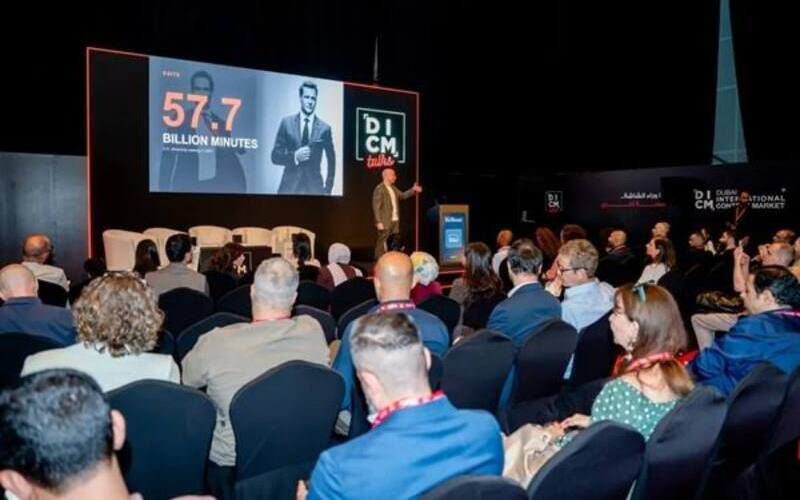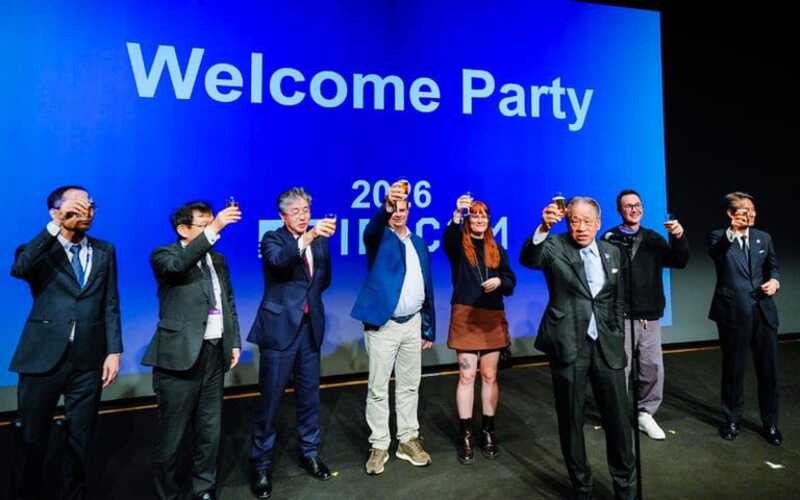
APAC’s sports boom is far from over, but the era of effortless media-rights inflation has come to a close. Speaking at Media Partners Asia’s (MPA) second APOS Sports Edge event in Singapore this year, where Executive Director Vivek Couto characterized the current inflection point as ‘the end of the easy part’, warning that annual sports rights fee growth across the region is set to decelerate sharply to 1%–2% through 2030, down from roughly 10% annually between 2021 and 2026.
The forecast was unveiled alongside MPA’s Mapping the Sports Economy paper, which evaluates a $16 billion commercial sports economy across 14 APAC markets in 2026. The publication combines two new studies: APAC’s Sports Economy and Where Value Goes Next and ampd’s APAC Sports Fandom: The Consumer’s Voice, based on a survey of 10,249 fans across six markets.
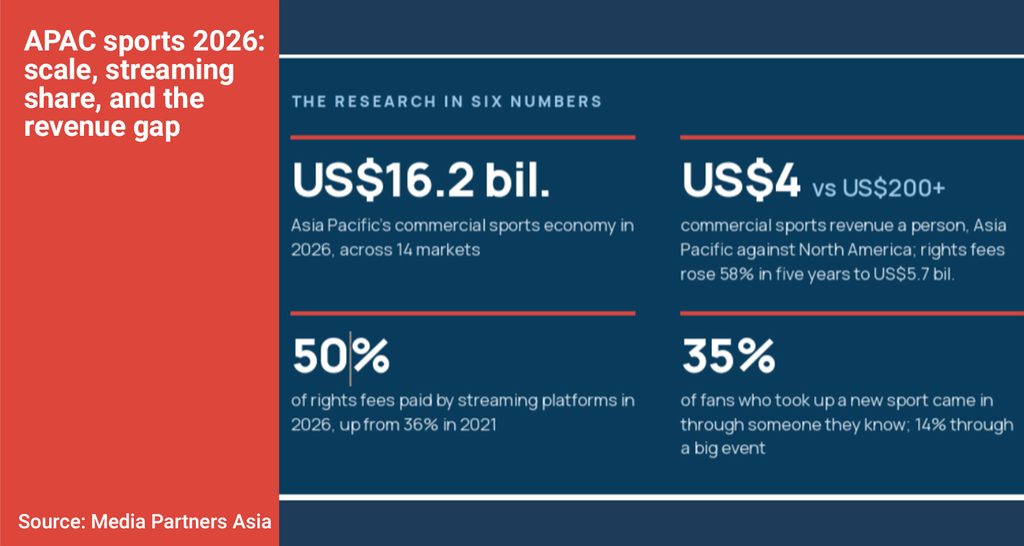
Over the past five years, regional sports rights fees surged 58% to reach $5.7 billion, driven heavily by digital platforms. According to consuntancy firm data, streaming services now account for 50% of all sports rights fees paid in Asia, up from 36% in 2021. Yet Couto noted that this expansion was narrowly concentrated and left significant commercial value untapped.
‘For five years, rights fees rose on a handful of contested tenders, more than half of the growth from one country and much of it from one sport, and several buyers are still paying for what they bought. Yet the region earns about US$4 of commercial sports revenue against more than US$200 in North America’, Couto said.
Rather than viewing that disparity as a limitation, MPA frames it as the sector’s biggest growth runway—provided rights-holders diversify beyond broadcast and streaming deals. ‘That gap is not a ceiling. It is headroom. The next dollar will come from the seat, the sponsor, the local star and the women’s game, and it will go to the rights-holders who know their fans by name’, Couto added.
Consumer data from ampd underscores why relying solely on pay-TV or OTT subscriptions is no longer sufficient. The study revealed that 63% of fans who spent money on sports over the past year did not purchase a single subscription. Furthermore, fandom acquisition is overwhelmingly social rather than event-driven: 35% of fans who picked up a new sport were introduced to it by someone they know, compared to just 14% who entered through a major live event.
Capital flows into the sector also reflect a need for operational discipline. ‘About US$14 billion has been invested in APAC sport or changed hands since 2021, mostly in IPL franchises and venues. Capital has bought scarcity, not cash flow’, Couto observed. ‘In the end, it’s all in the cash flow. The work now is building businesses, not simply selling rights’.
MPA outlined five strategic priorities for the next cycle: recognizing that rights growth must be earned—through local products, investment, new rights structures, and anti-piracy action; closing the regional sponsorship gap; owning the venue, the calendar, and the direct fan relationship; backing the next wave of contested tenders; and, fundamentally, running sport as a sustainable commercial business.
Alberto Buitron