Saltar al contenido

BEAJ: Japanese content takes center stage at MIPCOM 2025

Virginia Mouseler, CEO, The WIT will be the moderator of the showcase, along with Makito Sugiyama, Executive Director of BEAJ 

The Broadcast Program Export Association of Japan (BEAJ) is leveraging its flagship initiative, “Treasure Box Japan (TBJ)”, to solidify the country’s position as a global content source at MIPCOM 2025. According to Makito Sugiyama, Executive Director of BEAJ, the organization is implementing a comprehensive, multi-layered program to ensure that Japanese content gains ‘continuous visibility, credibility, and opportunities in the global marketplace’.

The cornerstone of this effort is the “TBJ” showcase, scheduled for the opening day of MIPCOM, which is strategically designed for maximum impact. Sugiyama noted in conversation with Prensario, that this timing ensures that Japanese formats are ‘not only seen but also prioritized in subsequent business discussions and negotiations’ by the thousands of buyers attending the market. This year’s event is backed by the Ministry of Internal Affairs and Communications and features ten of Japan’s leading broadcasters, including Nippon TV, TBS, TV Tokyo, and Fuji TV, showcasing an ‘unprecedented lineup of creativity’.

A diverse portfolio of formats

The 2025 “TBJ” lineup underscores the creative breadth of Japanese television, offering a mix of original and versatile unscripted formats. This year’s slate includes concepts that blend entertainment with high-stakes originality. For instance, the simple, visually engaging quiz show Just Circle it! (NHK Enterprises) allows for seamless play-along participation via an app, while Mega Catch (Nippon TV) features a survival competition built around colossal, jaw-dropping challenges, where contestants must «catch it and survive» to claim a cash prize.

Japanese broadcasters are also introducing concepts that blend genres and bridge generational divides. Six Genz Game (Yomiuri TV) requires six contestants from wildly different age groups, spanning Showa-era seniors to Gen Z TikTokers, to collaborate to win. Furthermore, the slate includes the horror-themed variety show Reform Horror House (MBS), where celebrities investigate a ‘horror-modified’ old Japanese house to uncover a mystery, and SUMO KING (TV TOKYO), a physical entertainment series where contenders face off on a massive sumo ring across knockout stages.

Other formats include Infinite Loop (TBS), a psychological competition where challengers accumulate prize money in connected rooms but face elimination if they fail a mission, and the psychological game show Like or Dislike Doubt (Fuji Television), which asks players to discern the genuine preferences of their rivals.

Strategic support and global visibility

Beyond the live presentation, BEAJ provides continuous support for international expansion. The organization manages the “Japan Program Catalog (JPC)”, a «one-stop portal site» with over 900 registered overseas buyers, which acts as a digital hub where showcased TBJ titles, including trailers and production details, are integrated. This dual approach—‘live presentation at MIPCOM and online continuity through JPC’—is designed to translate the market buzz into concrete business opportunities.

Sugiyama asserts that Japanese creativity stands out globally due to its combination of professional-driven performance, cultural distinctiveness, and ‘fearless experimentation’. He points out that the domestic industry’s competitive nature forces producers to constantly innovate, resulting in globally adapted formats like Dragon’s Den/Shark Tank and Ninja Warrior.

BEAJ

2F, 1-17-5, Kanda-Nishikicho, Chiyoda-ku,
Tokyo, 101-0054, Japan
https://www.beaj.jp/

BEAJ is the initiative that supports broadcasters from all over the archipelago to export their content to the world. As organizer of Japan Pavilion, Japan Program Catalog and other events, BEAJ has become a major global presence in content markets. With a vast network of broadcasters representing the best Japanese programs, and strong government support, BEAJ is your one-stop-shop for exploring business opportunities with Japanese content providers. BEAJ is committed to sharing the rich history and culture reflected in Japanese programs.
Some of the companies under the BEAJ umbrella are:
Sumitomo Corporation, Japan Broadcasting Corporation, Tokyo Broadcasting System Television, Inc., TV Asahi Corporation, TV Tokyo Holdings Corporation, Nippon Television Network Corporation, The Japan Commercial Broadcasters Association, Fuji Television Network, Inc.

Contacts

Makito Sugiyama
Executive Director

sugiyama@beaj.jp

Lineup of 10 world-premiere titles

Just Circle it! (NHK Enterprises)

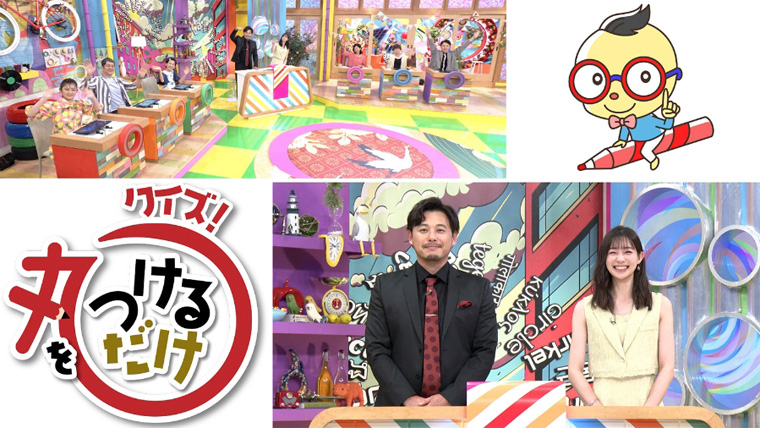
Just Circle It! is a super simple, visually engaging quiz. This new type of quiz show asks questions that people of all ages and knowledge levels can answer and enjoy. With all the answers there, on a screen, the game perfectly translates to a play-along game. Through a simple app, viewers at home take part in the show, just like the panelists on TV. Friends and family members can join in and enjoy the show together.

Mega Catch (Nippon TV)

Mega Catch is the ultimate showdown where a single rule decides everything: catch it and survive—miss it and you’re out! Round after round, the competition intensifies until just one player remains to claim the cash prize. This is no ordinary game of catch. These are colossal, jaw-dropping challenges designed to deliver pure spectacle. A giant ball comes crashing down from the sky. A super heavy sandbag swings like a wrecking ball. A blistering 200km/h fastball rockets straight at them. Power and courage—that is all the contestants need. Mega Catch keeps audiences hooked until the very last catch.

Six Genz Game (Yomiuri TV)

Japan’s latest hit show bridges the generation gap with laughter and teamwork! Six contestants from wildly different age groups—from Showa-era seniors to Gen Z TikTokers—must collaborate to win a massive cash prize. Instead of conflict, the show celebrates connection: can a 60-year-old guess a viral dance trend? Can a teen understand rotary phones? It’s a hilarious, heartwarming clash of eras where knowledge, nostalgia, and pop culture collide. With sky-high ratings and viral buzz, this cross-generational game show proves that teamwork across time isn’t just possible- it’s wildly entertaining. Tune in and watch generations unite like never before!

Wait, What? (ABC TV)

“Wait, What!?” is a best-hit unscripted travel-comedy show where celebrities explore local towns while studio hosts observe and comment in real time. At the heart of the format is the iconic “Wait, What!?” button: whenever something unexpected happens, hosts freeze the footage to deliver sharp yet affectionate humor, instantly transforming ordinary travel moments into laughter. Combining observational travel with spontaneous reaction comedy, the show offers a fresh, globally adaptable format. Originally launched as a local TV program in Osaka, it has grown into one of Japan’s most-watched variety titles on OTT platforms and is now streaming worldwide.

Infinite Loop (TBS)

Six challengers are locked in a confined, hexagon-shaped space, facing a series of high-stakes missions in a battle to win the ultimate cash prize. The contestants move through endlessly connected rooms, identical in color and shape. As long as they keep succeeding in the missions, they can accumulate an unlimited amount of prize money. However, failure comes at a cost — one contestant must be voted out. Beyond intense missions and psychological warfare of deciding who gets eliminated, only one person will claim the total winnings.

Reform Horror House (MBS)

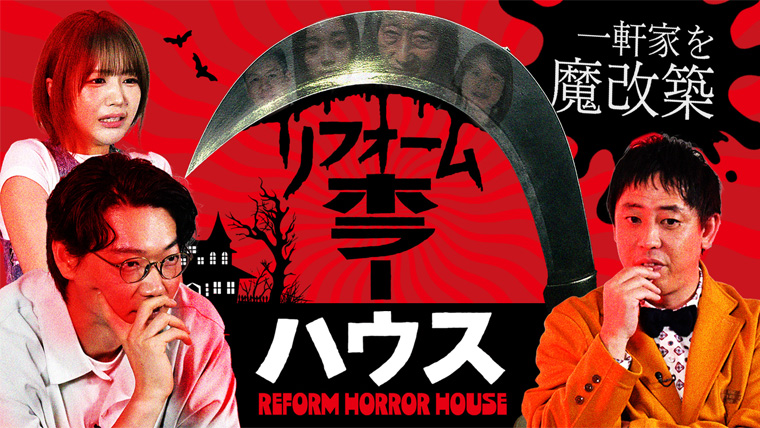
The stage is set in an old Japanese house, “horror-modified” with the collective wisdom of the modern horror world. But this is no ordinary home—it’s said that anyone who approaches meets a mysterious death. In search of the truth behind the curse, celebrities venture inside. As viewers follow their investigation, they uncover hidden clues scattered throughout the footage, gradually piecing together the mystery and its shocking conclusion. This unprecedented, genre-bending Horror × Variety Show invites audiences to join the thrill of unraveling the enigma in real time.

SUMO KING (TV TOKYO)

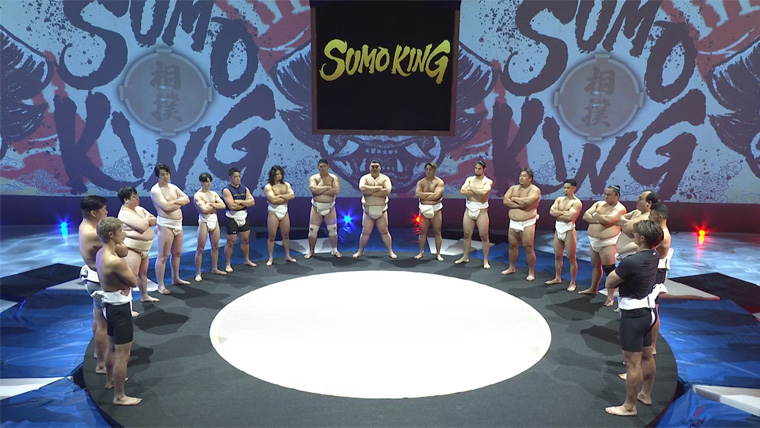
From athletes to bodybuilders, firefighters to wrestlers—20 powerhouse contenders face off across four knockout stages, all on a massive SUMO RING.
Stage 1: SPINNING SUMO RING
Stage 2: SUMO RING CLIMB & CONQUER
Stage 3: POWER WALL SUMO RING
Final Stage: ONE-ON-ONE SUMO BATTLE
A spectacular collision of strength, drama, and shareable, viral moments—this is physical entertainment reimagined.

Like or Dislike Doubt”(Fuji Television)

Studio-based psychological game show. Each player prepares 16 cards, 8 cards each listing their favorite and least favorite things, which were previously asked to the participants. Using these cards, the game is played. When it’s your turn, you reveal one card and declare, “I like XX,” always using the word “like.” Other players either pass if they think it’s something you genuinely like or call out “Doubt!” if they think it’s something you actually dislike. It’s simple and easy for anyone to understand, and the format works in any country, as it’s all about discerning whether someone truly likes something or not.

The Laughing Throne (KANSAI TV):

A studio-based variety competition blends musical chairs with improvisational comedy. Ten or more players scramble for chairs labeled with distinct themes like one-liners or physical gags. When the music stops, anyone left standing must challenge a seated player, choosing strategically based on the chair’s theme. The pair performs original bits on the same prompt. A judging panel evaluates delivery, creativity, timing, and audience reaction to declare a winner. Victors keep their seats; losers are eliminated. Rounds repeat, tightening the field to two finalists. A climactic head-to-head determines the episode’s champion, who earns the “Throne” for generating the biggest, sustained laughs.

Love Time Travel (TV Asahi):

A unique dating reality show where singles in their 20s explore romance across the ’80s, ’90s, and today. Before smartphones and social media, date spots came from TV shows and magazines, and memories were captured on instant film cameras. Without phones, showing up at a wrong meeting spot could mean never finding each other. In a time when life was less convenient, every connection felt more special. Getting to know someone took time—relationships developed slowly, but deeply. Now, a generation raised on instant messages must slow down and take on the challenge of old-school romance.