The connected television (CTV) ecosystem is undergoing unprecedented expansion on a global scale. Driven by the growth of Smart TVs, the consolidation of AVOD and FAST models, and advertisers’ shift towards premium digital environments, CTV is positioning itself as the new center of audiovisual consumption.
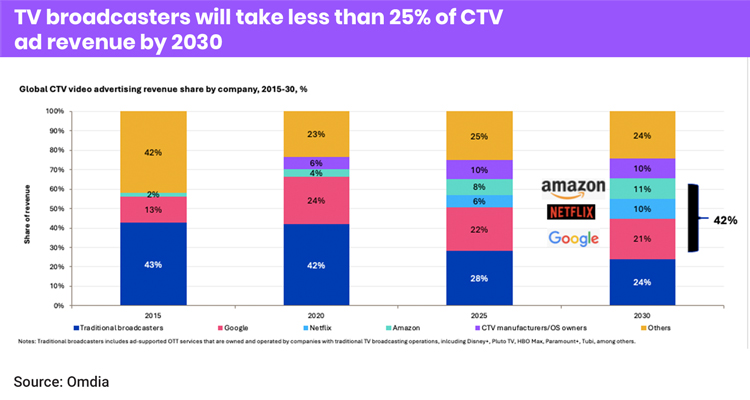
Globally, the CTV market exceeded £267 billion in 2024 and could reach more than £530 billion by 2030, according to Grand View Research. Advertising in this format is also skyrocketing: more than half of global advertisers plan to increase their investment in CTV in 2025, attracted by its segmentation capabilities, accurate metrics, and the sustained attention it generates on the big screen.
Asia-Pacific is emerging as the engine of this growth. The region already accounts for more than 38% of global revenue in the sector and leads adoption rates, with annual growth of more than 20%. Factors such as falling prices for smart TVs, the expansion of 5G and the rise of free, ad-supported models (AVOD/FAST) are driving the phenomenon. In markets such as India, Korea and Southeast Asia, millions of new users are joining an ecosystem every year that combines local content, accessible technology and more relevant advertising formats.
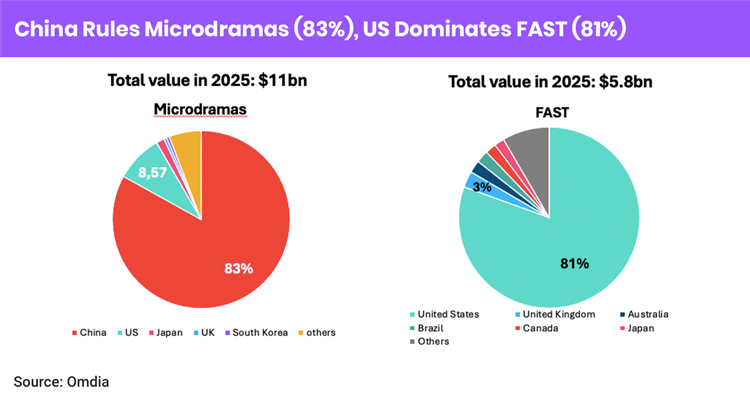
Major manufacturers (Samsung, LG, TCL, Hisense) and platforms such as YouTube, Pluto TV, Rakuten TV, Samsung TV Plus, and Freevee have capitalized on this boom. Through intuitive interfaces, local partnerships and hybrid strategies (subscription + advertising), these players are redefining how audiovisual content is consumed and monetized. YouTube, for example, is now the most widely used platform on connected televisions in both Asia and Latin America, far surpassing traditional competitors.
A comparison with the Latin American market reinforces the magnitude of the trend. In Brazil, ComScore reports that 64% of internet users consume content on CTV, spending an average of four hours a day. Ninety-six per cent do so from Smart TVs and, on average, each household with CTV accesses 8.2 streaming services (4.6 paid and 3.6 free). The most viewed content is films (93%) and series (88%), followed by sports (63%) and news (65%). In addition, more than 50% of viewers agree to watch advertising in exchange for free access or reduced rates.
This acceptance of advertising is also replicated in Asia, where consumers value personalized and interactive ads. For advertisers, CTV offers a brand-safe environment with greater recall and verifiable metrics than traditional TV. In fact, 57% of marketers in Asia-Pacific already allocate at least 40% of their digital budget to CTV.
The phenomenon reflects a structural change: the television screen is once again at the center of entertainment, but under a digital logic. The players leading this transformation combine premium content, a seamless experience, recommendation algorithms and flexible monetization models. At the same time, regional fragmentation (especially in Asia, where mature markets such as Japan coexist with emerging markets such as Indonesia) requires strategies tailored to each country.
Globally, CTV is winning the battle for attention. With an average of four hours of daily consumption in markets such as Brazil and double-digit annual growth in Asia, it is establishing itself as the format that combines the best of both worlds: the mass reach of television and the precision of the digital environment. For content creators, programmers and distributors, the era of connected TV is not just a technological trend, but a strategic opportunity to redefine how, where and with what models the entertainment of the future will be consumed.