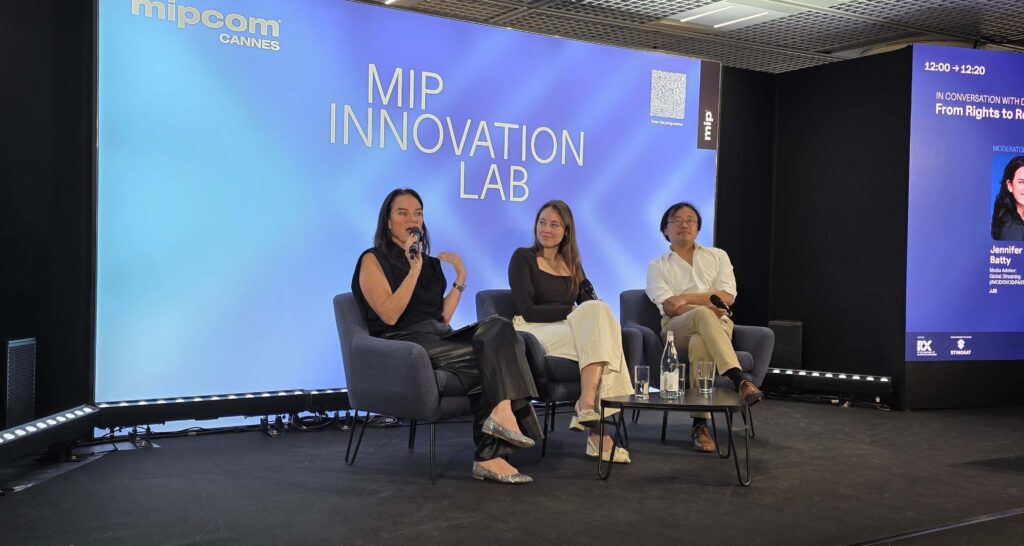
Executives from DAZN, the global sports entertainment platform, addressed the rapid transformation of the sports broadcasting industry at a MIPCOM conference, focusing on the company’s shift toward a multi-model ecosystem designed to generate diverse revenue streams. DAZN, which launched in 2016 and now offers rights for over 300 sporting events across 200 countries, views the consumer as the new key buyer in the marketplace.
Building the sports ecosystem
Lisa Eller, VP of Advertising for DAZN Group, outlined the company’s monetization approach in a fragmented market. Eller noted that while her role is essentially sales, the complexity lies in meeting audience demands for diverse ways to interact with the content.
«We have to create a whole ecosystem to make sure that we reach the audience on whichever, in whichever context they want to use our services,» Eller stated. This strategy requires a sophisticated approach to advertising. «It’s a challenge to create a holistic offering for brands to make sure that they reach the user in the exact moment they want them to reach with the exact same asset,» she added.
DAZN has embraced a range of distribution models, including a subscription service (SVOD), FAST channels, AVOD, and selected live events available for free.
Escalation of rights fees and market flexibility
Haruka Gruber, SVP of Media Central EU for DAZN Group, confirmed that the sports media industry is entering a critical time marked by escalating license fees and the entry of tech giants. He cited massive recent deals, including Paramount’s $7.7 billion investment in UFC and Netflix’s rumored $5 billion partnership with WWE. The market is also seeing unique acquisitions by digital creators, such as YouTube streamer Zach Netty, who acquired the Saudi football league.
Gruber stressed that for content platforms, success hinges on scalability and flexibility. «I think the deals that you outlined shows two things. One thing is it’s crucial to be scalable,» Gruber said. He also highlighted the importance of monetization flexibility, noting that platforms must support paid models, free platforms, and new monetization opportunities like co-sharing ad inventory.
Gruber shared that DAZN’s decade of experience has taught the company that simply streaming live events is «just not sufficient». Instead, successful strategies require content partners to «really nurture the whole wheel». This includes carving out non-live content for YouTube, licensing content for FAST platforms, and monetizing through ad sales. «Unfortunately, there’s not one recipe for a media company. You just need to know all business models and find your perfect mix,» Gruber concluded.