TikTok operates as a digital platform that has evolved from a short-video application into a significant global media business, rivaling established giants in the sector. The core of its business model is a self-sustaining ecosystem designed to balance the interests of four main stakeholders: users, creators, brands, and advertisers.
In this report, Prensario reviews the key points to consider about the platform, and how content creators, media professionals, and advertisers can take advantage of the monetization solutions and opportunities it offers.
Core business pillars
The platform’s success is driven by a structure that aligns incentives for all participants:
- Users are attracted by the highly personalized, entertaining, and endless stream of content, which drives high engagement and average daily usage of 95 minutes.
- Creators are motivated by the algorithm’s ability to allow any user to achieve virality quickly, even without a massive follower base, establishing the platform as a viable career alternative.
- Brands and Advertisers fund the cycle by paying for access to one of the most engaged global digital audiences.
Revenue streams and monetization strategy
TikTok employs a diversified monetization strategy, moving beyond a single source of income to generate billions in revenue annually. Key revenue streams include:
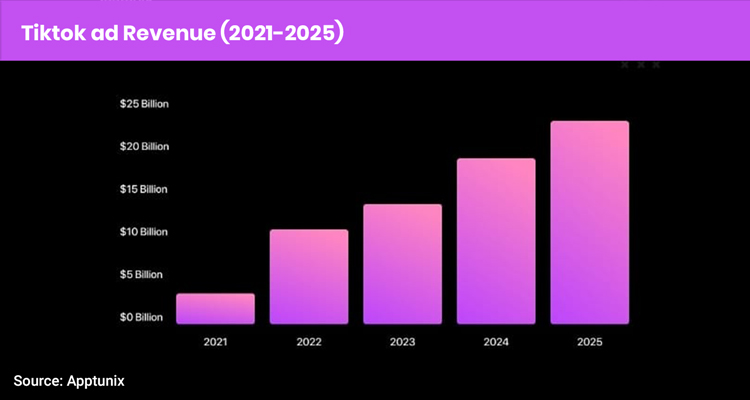
- Advertising Model (The Cash Cow): Advertising is the primary revenue source, built on the platform’s high user attention. This includes in-feed ads that blend seamlessly with organic content, branded content partnerships with influencers, and sponsored hashtag challenges that drive viral campaigns.
- In-App Purchases (TikTok Coins): Users purchase «TikTok Coins» to tip or send virtual gifts to creators during live streams, with the platform retaining a share of the transaction. In 2023, users spent over $3 billion on these purchases.
- Creator Monetization: The platform incentivizes content generation through the TikTok Creator Fund, virtual gifting, and revenue-sharing from ads, establishing a consistent income model for influencers.
- E-Commerce Integration («Shoppertainment»): TikTok Shop integrates buying products directly into the entertainment experience, turning the app into a social commerce giant. This model drove $4.4 billion in in-app consumer spending globally in 2023.
Technological foundation
The platform’s high engagement is powered by proprietary technology, particularly its recommendation engine. The «For You Page» utilizes AI and machine learning to predict user preferences, maintaining the platform’s «stickiness». TikTok also capitalizes on short-form, or «snackable,» content, which lowers the barrier for creators and fuels binge-watching.
As of 2024, TikTok reported 1.2 billion monthly active users globally, with annual revenue reaching $16 billion in 2023. Its platform business model, which aligns entertainment, creator incentives, and commerce, has solidified its position as one of the most profitable digital businesses worldwide.
AB