The sixth edition of Iberseries & Platino Industria kicked off in Madrid, two weeks ago. Featuring Mexico as the Country in Focus, the event gathered platforms, producers, distributors, and creators to generate commercial agreements and promote projects in development.
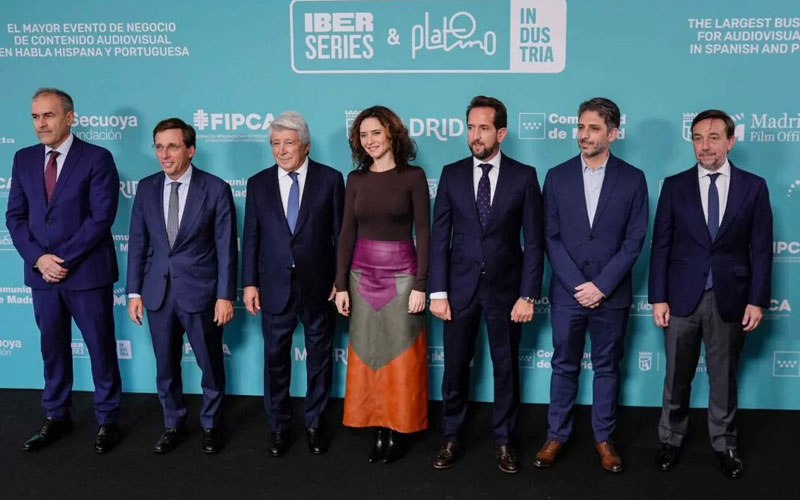
Ahead of the inauguration, the event’s organizers outlined the year’s objectives. Samuel Castro, director of Iberseries, explained that the gathering advanced its consolidation ‘as a B2B event where producers, creators, and other industry professionals find a place to do business’. Regarding the internationalization strategy, Castro detailed their goal to ‘somehow boost co-production among projects from countries within that European Atlantic arc’, which is why Portugal was added to the usual delegations alongside the attendance of commissioners from Germany, Italy, and France.
Adriana Castillo, general coordinator of Platino Industria, highlighted the market’s comprehensive approach to productions: ‘We have managed to make the event provide that accompaniment from development and the script stage, all the way to sales and distribution’. The fundamental purpose of this edition, she added, was to ‘connect all the key players in the industry’ to facilitate sales and agreements.
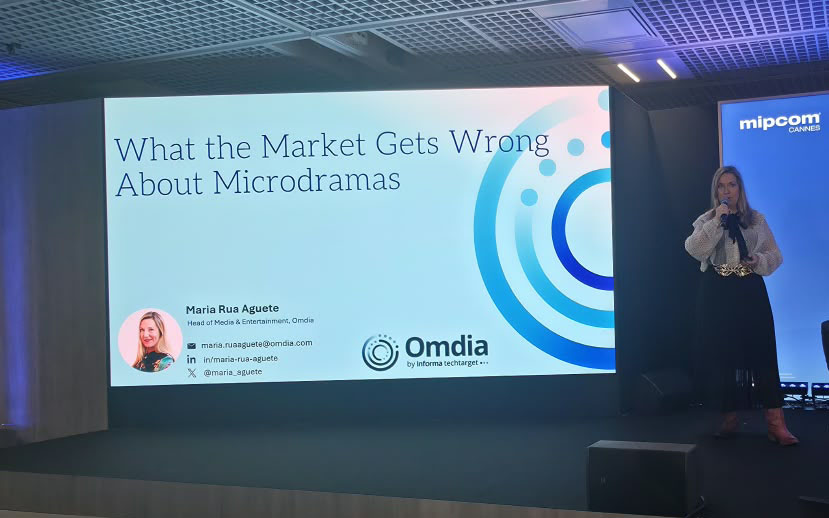
The event’s program featured panels on the technological and consumer trends impacting the sector. Addressing the growth of vertical series, or microdramas, in the digital space, Castillo noted that ‘there is a lot at stake in microdramas, not only financially but in terms of betting on retaining the audience’. On the use of generative artificial intelligence in productions, Castro defined the market’s stance: ‘We are taking an approach of getting closer to AI (…) it is a present reality, and [we want to address] how to use it in a regulated way, which is the first priority, and an honest one’.
Economic impact and institutional support
The event featured the participation of Madrid Mayor José Luis Martínez-Almeida, Secuoya Studios President Raúl Berdonés, and EGEDA President Enrique Cerezo. Also speaking was the President of the Community of Madrid, Isabel Díaz Ayuso, who emphasized that the language shared by over 800 million people helped Spanish- and Portuguese-speaking countries become ‘greater and more universal’. Ayuso also pointed to recent international shoots in the region, asserting that Madrid was once again ‘in the eyes of the entire world’.
Locally, the audiovisual industry contributes 2.6% to Madrid’s GDP, generating around 30,000 direct jobs spread across 3,500 companies. Within this context, the Madrid City Council, through the Madrid Film Office, sponsored various industry activities. During the market, the “Showrunner Training Workshop” commenced for 12 selected projects, alongside a roundtable on creativity and global financing featuring executives from production companies like Diagonal TV and LaZona. The schedule also included the “Pitch Madrid” session, where nine projects sought industry support, and concluded with an institutional working breakfast.
Promoted by EGEDA and Fundación Secuoya in collaboration with FIPCA, the event registered an increase in participation this year. The sixth edition opened with 2,800 accredited professionals (47% of international origin), the registration of more than 1,500 companies, and the presence of roughly 200 buyers. Among the 54 participating countries, the organization reported a growing attendance of delegates from non-Ibero-American nations, such as China, India, South Korea, and Turkey.