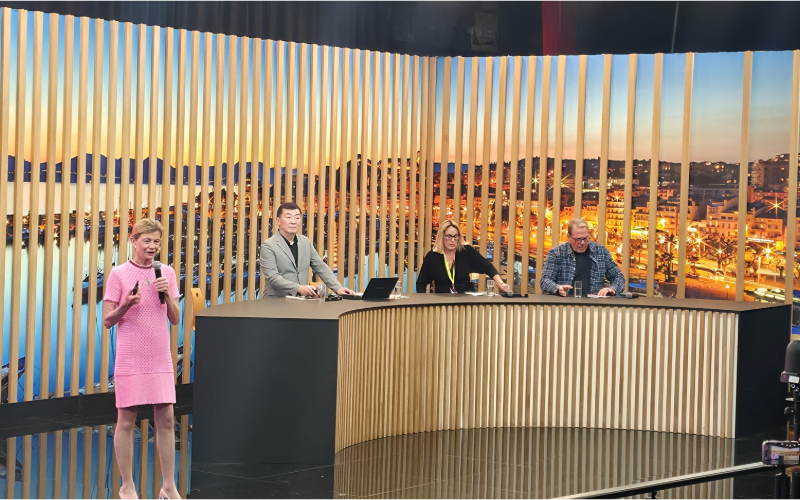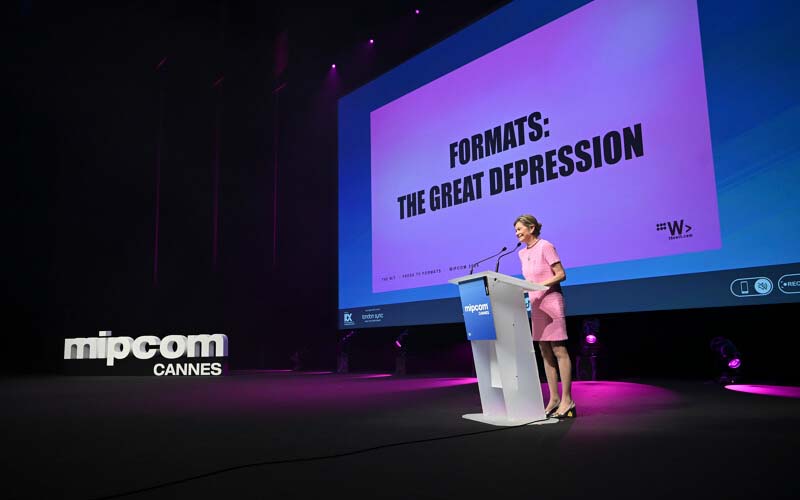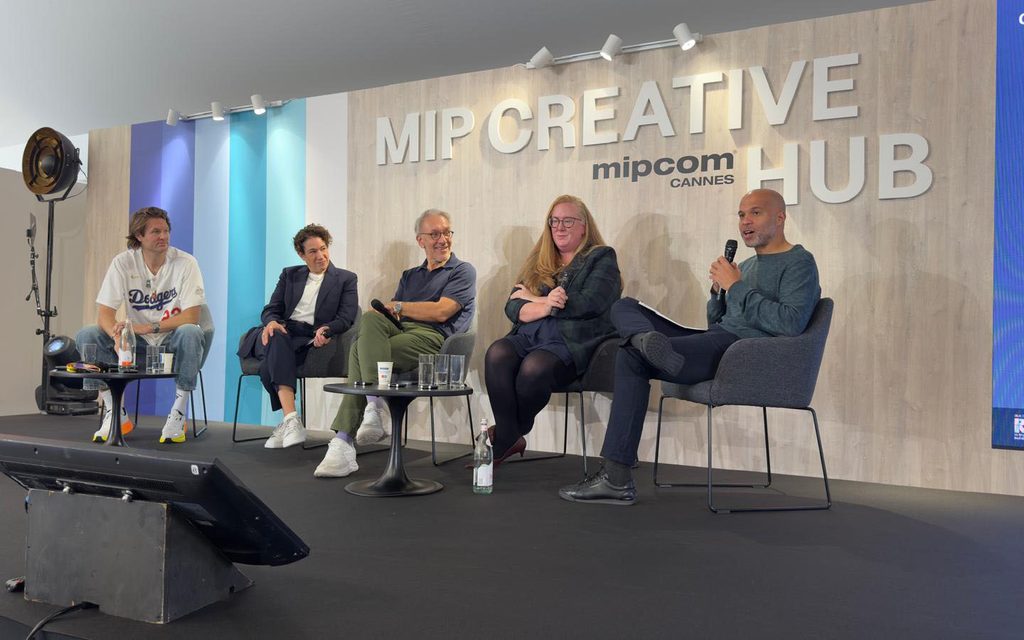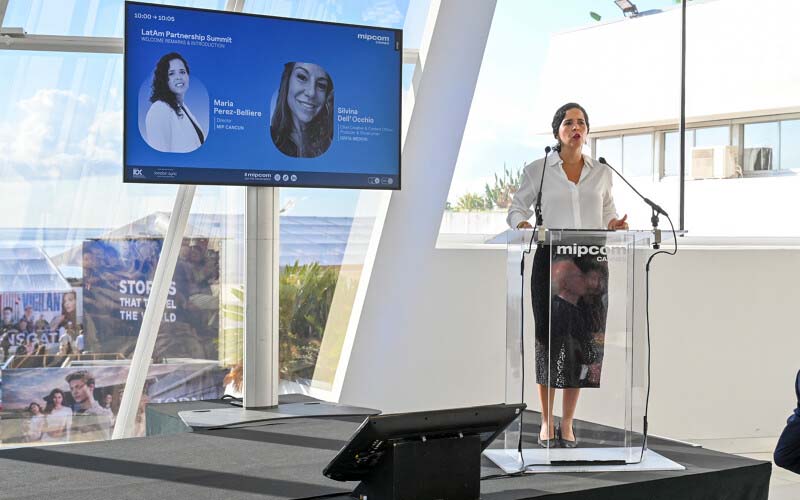
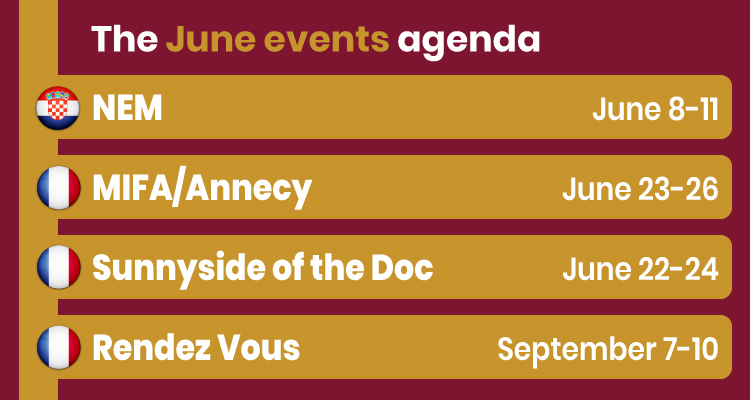
During the last years, June has turned into a strategic month for European content market, due to many events that have taken place, especially NEM Dubrovnik for Central & Eastern Europe (CEE) but also for kids (MIFA in Annecy) and Sunnyside of the Doc (in docs & factual). Also, we have Rendez Vous from Unifrance, in early September. Other CEE events are not done this year: Content Warsaw, Natpe Budapest. With the whole, it is important to notice and take advantage of market trends that are defining success or failure in the industry. Which are they?
Let’s see what we’ve collected during the European first half events —MIPLondon, London Screenings, SeriesMania, Content Libon— and even during Los Angeles Screening, USA, in May, very well attended by European buyers. Above all, content members must evolve, include new ways of monetization, to have a more promising market.
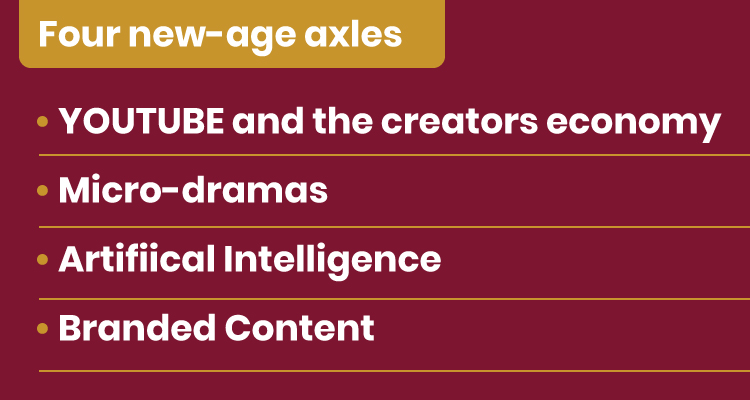
Four new-age axles, three European titan pillars
• The content industry has now 4 new-age axles: one, YouTube and the creators economy, that bring new rules, ideas, people to content industry. TV needs to be profitable in YouTube and social media contents are an opportunity to refresh TV screens. Two, Micro-dramas, which had the most crowded conferences at spring events, everybody wants to hear about. Many players need more than producing original content, how to adapt traditional programming to vertical. The Chinese apps are leading the global market, the challenge is to extend the life cycle of the users.
Three, AI, which is like the cloud, it doesn’t provide own products, it is everywhere to improve and change most of the traditional distribution and production pillars. And four, but the most important for many, Branded Content, which is the most direct and ‘easiest’ way to surpass the current funding cross-roads. This year Publicis, one of the US ad agencies focused on contents that connect big brands with projects, got USD 1.5 million per episode in branding, for an Amazon Prime project.
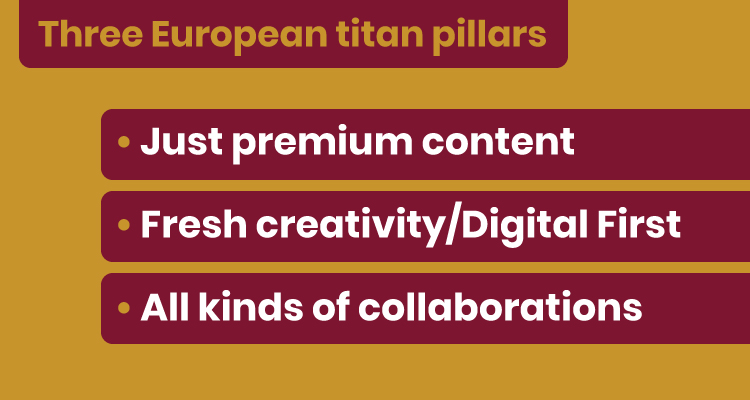
• The European format titans, at the same time, have three big pillars to push business: just premium content, to have real success chances in the market; fresh creativity, based on the Digital First people and contents, plus new origins (more exotic, better) to change the current perspectives; and collaborations, with co-productions, co-developments, co-marketing, as a main key factor to move forward globally in contents. Nobody, from Hollywood Studios to Google, can alone at these times.
Varied first half trends
• Unscripted genres up? At the London Screenings, we saw many Survivor alike formats, always on top recently; dating shows, growing again; cooking shows keep their good moment; and physical competences more than quiz shows… prime time audiences prefer not to think so much nowadays. Big broadcasters of main European countries, like shiny floor show options.
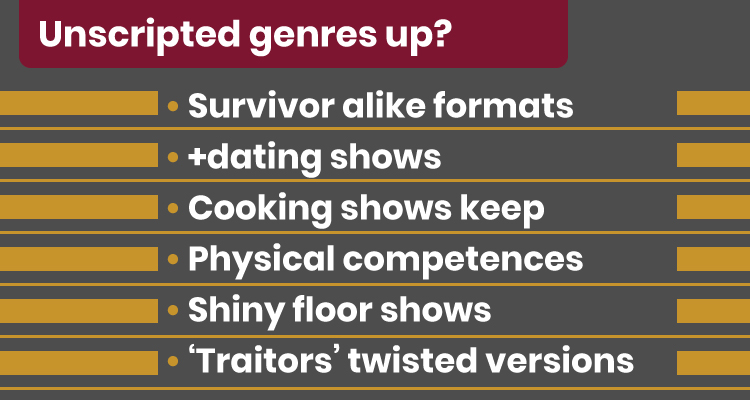
• The recent big hit? ‘Traitors’, the All3Media’s mystery reality format hit, continues having twisted versions. In fictions, the ’just premium content’ trend is visible, with Fox’s ‘The Faithfull: women of the Bible’, as a good example. In London we’ve seen mainly dramas and thrillers, far more than comedies. To launch spin-offs, sequels, prequels, reduces risks. Both in unscripted and scripted, all genres, to generate celebrity contents pays very well these days.
• Other first half tips: podcasts are a segment not so usually mentioned, but it is taken in mind more and more as another option to refresh media. During MIPLondon also appeared the concept of ‘Hyper distribution’, which is the new way that public broadcasters, medium producers and players in general, have to surpass traditional limitations in distribution: social media, online communities… global niche consumers come progressively.
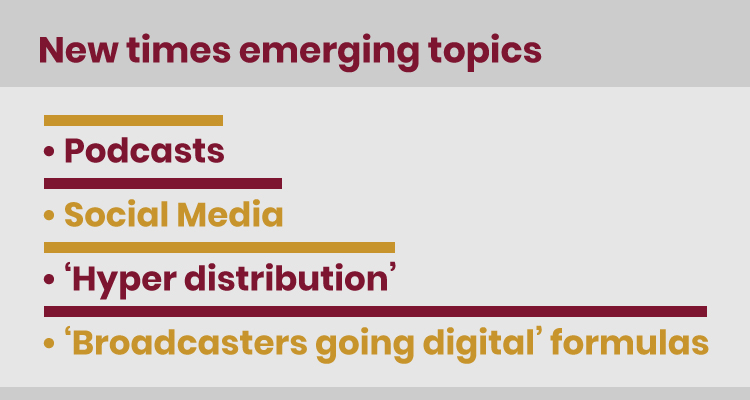
• At the surveys Prensario made at recent shows with buyers, the broadcasters required mainly two issues: to continue receiving traditional products for their channels —procedurals, big entertainment shows, etc.— and to make them easier the digital transition: formats that have specific social media or product placement developments, thought branded content options. Beyond digital, monetization, fundings, are always the top issues.
Six newest trends
During May, Prensario was interacting with many European buyers. What are newest trends seen by them? Many can generate surprise… one, the program developers are back to the job stories as in the 70’s (doctors, lawyers, policemen, etc) but now the jobs are expanded (plumbers, mechanics, etc) and these make easier Branded Content and Product Placement options, with the suppliers of products, solutions involved. Second, there is no more hard discussions about windows, now platforms and broadcasters agree easier each other the order or simultaneous releases. The top thing is to have the product, not the first window.
Three, the hooks to push up a content are more and more on the screen: famous actors especially. No main promotional value to directors, writers, etc, except if they are celebrities. Four, in genres, the platforms point out more to gain young audiences, with comedies, horror contents, apart from thrillers. Five, the European fictions are now more sporadic in Free TV screens, that are now gained by entertainment formats and live programming.
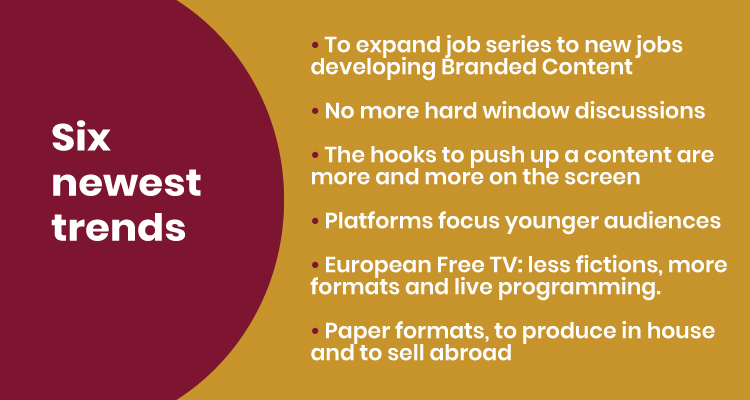
And six, as a main tip about developments, the main production players are requesting paper formats. There is no money for main hits, so it is better to develop from zero and then to sell abroad. This is the model of John de Mol and Talpa, where even without success, the projects are profitable (House of the Seek, etc.). ITV from England, TF1 from France, RAI from Italy, are all in the same direction.
So? Evolution… to digital, to branded content, to collaborations, to paper formats, but always to move from traditional business to new formulas. Who moves faster and gains new spaces first, will enjoy a good time of emergent segments with flashing opportunities.
Nicolás Smirnoff