The new State of Parenthood 2025 study, conducted by Moonbug Entertainment, confirms what many parents already know from personal experience: raising young children today is a constant juggling act. The report, which combines a national survey of 1.000 American parents with in-depth interviews, maps the tensions and desires that modern families face and provides fertile ground for thinking about how media, content, and brands relate to them.
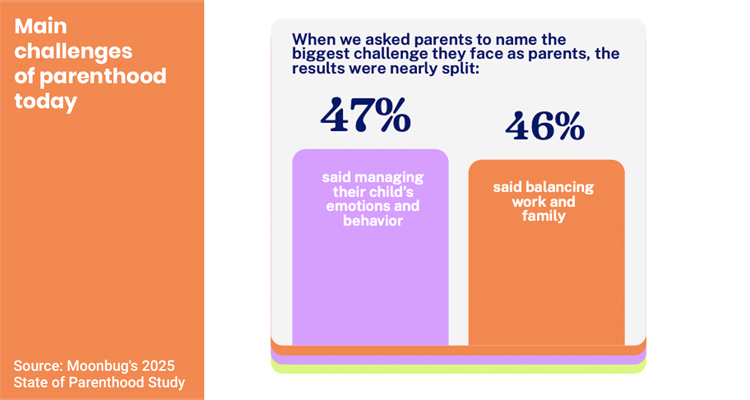
The conditions that once supported families (affordable childcare, stable jobs, close-knit communities) have weakened. The result is a lonelier and more burdensome form of parenting: six out of ten parents say they feel isolated in their role, and the weight of daily logistics, emotions, and household management falls mainly on mothers.
Paradoxically, this scenario of overload has also led to something positive: today’s parents spend more time with their children than previous generations. Men devote almost three times as many hours as they did in the 1960s, while women juggle work outside and inside the home. Equality, however, remains more of an aspiration than a reality: the “mental load” continues to be feminized.
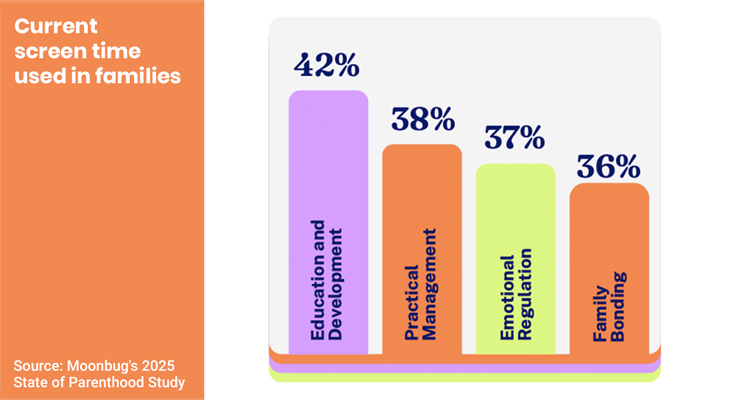
If there is one change that defines this generation of parents, it is the omnipresence of technology. Fifty-six percent identify screens as the main difference from how they were raised. But the relationship is not binary: devices function both as a management tool (to calm a tantrum, gain a few minutes of respite, or reinforce learning) and as a source of doubt and guilt.
The data is revealing: three out of four parents believe that the use of screens helps them manage their day, but more than half admit to feeling guilty about it. This tension defines contemporary parenting: pragmatism interspersed with social pressure and constant self-criticism.
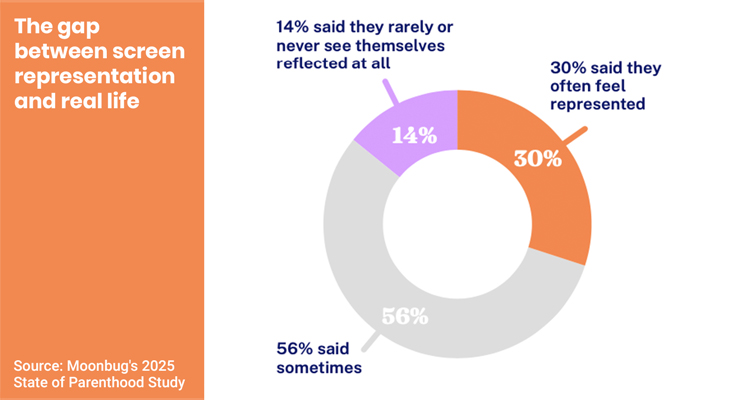
The report also reveals a gap between real life and what is portrayed in children’s content. Only 12% of parents believe that programs reflect the reality of their home. On screen, immaculate homes and ever-patient parents predominate, while anger, chaotic routines, and diverse family structures are left out.
When content manages to reflect everyday life (the small failures, the unexpected laughter, the different types of families) the bond changes. Forty percent of parents say they recommend these programs, and another 42% watch them again with their children. In other words, authenticity breeds loyalty.
The disconnect is not limited to entertainment. Forty-one percent of parents say they have never found a brand that truly represents their parenting experience. Mothers feel this even more than fathers. What is missing, they say, is advertising that talks about mental load, economic pressure, personal identity beyond parenthood, and also the humor that sustains everyday life.
The request is clear: less unrealistic perfection, more validation and support. When a brand manages to convey that, the impact is immediate: 44% of parents improve their opinion, 42% share the campaign, and 41% seek out related products.
The portrait painted by Moonbug is compelling: today’s parents are not looking for magic advice or judgments on how they should raise their children. They want to feel seen in the complexity of their days, recognized in their contradictions, and accompanied without guilt.
In a world where messages abound and empathy is scarce, the key is not to shout louder but to listen better. Showing parenting as it really isoverwhelming, imperfect, but also full of small triumphs, may be the most transformative gesture for those who are raising children today.
FF