According to consulting company OMDIA, Bundling will take a third of the SVOD business in USA for 2029. Bundling means to mix contents from different SVOD platforms in special packages for the cost of one of those streamers. In America, the segment is a smart solution for people that don’t like to afford many SVODs but want to access some of their main contents. How does it work? What is coming?
The bundling model integrates several streaming services under a single subscription, allowing users to access multiple catalogs and premium content without paying for each platform separately. This approach is becoming increasingly attractive as consumers face subscription fatigue, rising prices, and an overwhelming number of content options. By simplifying access and reducing costs, bundles aim to rebuild user loyalty while increasing retention for platforms and their partners.
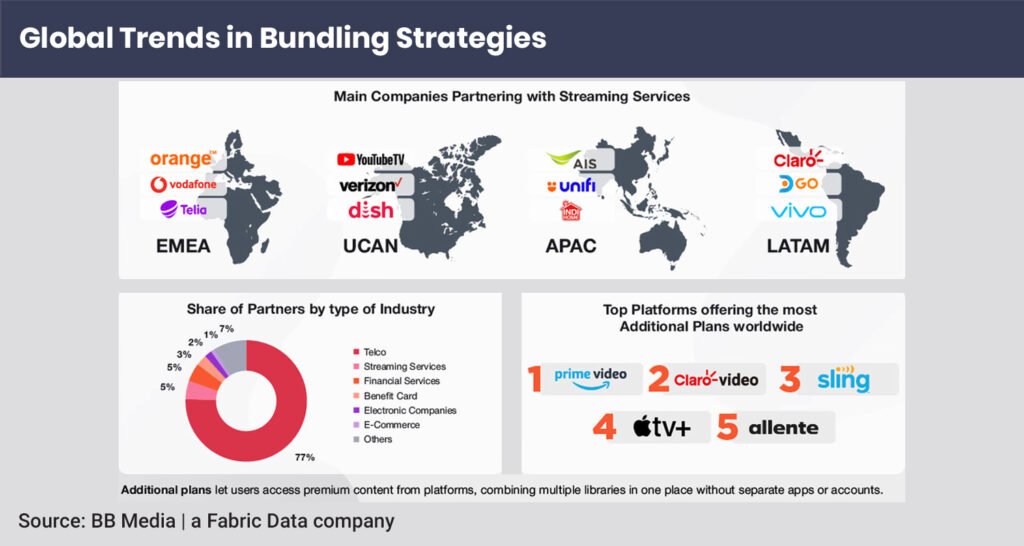
According to BB Media, Telecom operators are the main players driving this trend worldwide, representing 77% of bundling partnerships. Companies such as Orange, Vodafone and Telia in EMEA; Verizon, Dish and YouTube TV in North America; AIS and Unifi in Asia-Pacific; and Claro, Go and Vivo in Latin America are actively integrating streaming services into their offers. These alliances turn telcos into essential aggregators, using their subscriber bases and billing systems to facilitate access to entertainment ecosystems.
In parallel, the platforms leading in the number of additional plans globally are Prime Video, Claro Video, Sling, Apple TV+ and Allente. Their strategies combine SVOD, AVOD and live TV options, offering flexible and scalable content packages. The rise of these hybrid ecosystems points toward a future where users will be able to personalize their entertainment experiences, selecting content and price tiers within integrated environments.
Looking ahead, bundling represents more than a pricing strategy, it marks a structural shift in the streaming economy. As competition intensifies and growth slows, alliances between telcos, studios, and platforms will become vital for sustainability. The future of streaming will depend not only on exclusive content, but on the ability to integrate, simplify, and deliver value in an increasingly fragmented digital landscape.