As the streaming landscape matures, media organizations are shifting their strategic focus from pure subscriber acquisition to multifaceted metrics that capture sustained user engagement and robust financial performance. For traditional broadcasters navigating the digital transition, this recalibration requires balancing legacy operations with agile streaming models. At a recent industry panel discussing strategic agility and mixed-revenue models, Florent Rodzko, Senior Vice President of Group Strategy and Development at France’s TF1 Group, detailed how the company is adapting its operational frameworks to meet these pressures.
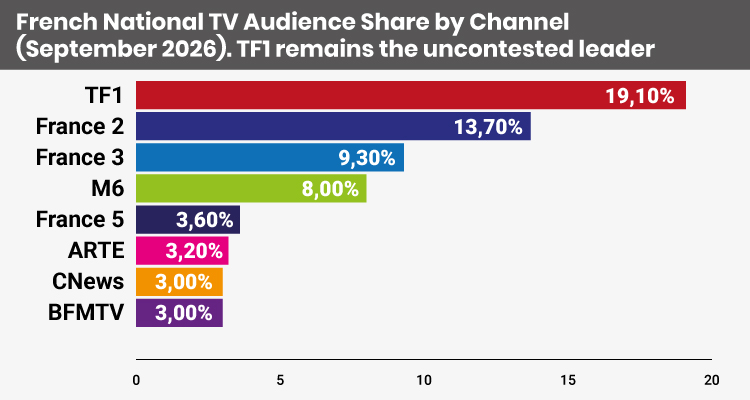
‘We’re trying to focus on where we have a right to win’, Rodzko stated, explaining that TF1 is developing a comprehensive view encompassing both its linear channels and its streaming platform, TF1+. With the introduction of micro-payments alongside its core advertising business, the company is refining its key performance indicators (KPIs). Rodzko noted a shift away from singular subscriber counts toward engagement depth and profitability. ‘Frequency definitely is a KPI that we look at more and more, like how many times per month people come on our platform’, he said. Furthermore, the executive emphasized the necessity of analyzing financial returns across different monetization models: ‘We’re trying to look at the total value that we generate from the consumers. And not only from a revenue perspective, but also from a margin perspective because the margins profiles are very different between advertising and paid offers’.
Addressing the persistent challenge of audience retention—often characterized as subscriber churn in subscription models, but viewed through the lens of frequency in advertising-first businesses like TF1—Rodzko identified content programming and technological infrastructure as the primary levers for maintaining viewer loyalty. On the content side, TF1 prioritizes recurring and serialized programming, such as daily soaps, supplemented by ‘companion shows’ that offer highly engaged fans new daily content built around established franchises.
Simultaneously, the company is investing in technology to streamline content discovery, aiming to reduce the friction users experience when navigating the platform. ‘Recommendation is key to make better discovery, but better choices as well on the platform’, Rodzko explained, noting that effective Customer Relationship Management (CRM) is critical for driving engagement outside the platform environment. ‘Making sure you push the right content to the right people at the right moment is really what we’re focusing on to increase frequency’, he added.
Implementing these data-driven strategies within a legacy broadcasting organization requires significant internal realignment. Rodzko acknowledged the complexity of unifying editorial, product, technology, and commercial teams, estimating that ‘like any transformation, 70% of the success is about change management, and the rest is just technology and tools and processes’. He stressed the importance of demonstrating that data analytics and creative instincts are not mutually exclusive but mutually reinforcing. ‘Creativity is great, and we need to make them understand that it’s gonna be accelerated by data-driven insights’, TF1 delegate asserted.
To bridge the gap between traditional broadcast expertise and modern digital capabilities, TF1 is actively seeking ‘integrators or translators’—professionals capable of understanding both worlds to facilitate cross-functional collaboration. The strategy team is establishing transversal task forces that operate on a test-and-learn methodology to accelerate time-to-market, particularly as new technologies like Artificial Intelligence demand rapid deployment. While integrating new roles such as growth hackers alongside seasoned editorial staff presents challenges, Rodzko remains resolute on the necessity of this cultural shift: ‘Bring[ing] these people to work together is something we do with transversal teams, and we need to work like this because the time to market is getting shorter and shorter’.
Title Options:
From Subscribers to Margins: TF1’s Florent Rodzko Outlines New Streaming KPIs and Retention Strategies
Bridging Broadcasting and Data: How TF1 Group is Restructuring its Strategy for the Streaming Era
Change Management and Cross-Functional Teams: Inside TF1’s Push for Strategic Agility in 2026