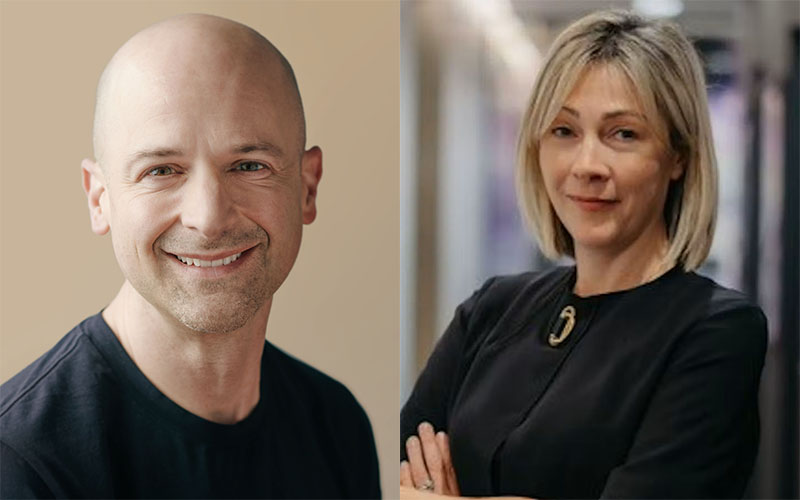
Netflix has marked a decade since expanding its original productions outside the United States, a transition that fundamentally altered its business model and technological infrastructure in the EMEA region. Over the past ten years, the streaming platform shifted from a centralized Hollywood approach to establishing local commissioning teams across Europe, the Middle East, and Africa. During the Enders TMT Leaders Live 2026 Conference, Larry Tanz, VP of Content for EMEA, detailed this structural shift. ‘We went from a programming hub in California serving a global audience to a team of local commissioners across the region, each focused on their own audiences, with local sensibilities, country-level budgets and decisions’, he stated.
This localization strategy is rooted in the premise that global success requires domestic resonance. Tanz emphasized that productions such as the UK’s Adolescence and Baby Reindeer, or Spain’s La Casa de Papel, rely heavily on established local television ecosystems. ‘There has never been a show that went global that didn’t work at home first’, Tanz noted. He pushed back against narratives portraying the platform as a disruptive foreign entity, arguing that Netflix operates as an embedded local business that reinvests its revenues into the regional creative economy. However, the executive also warned against increasingly rigid European regulatory frameworks regarding investment obligations and intellectual property ownership. He argued that a ‘one-size-fits-all approach, where IP always defaults to local producers by law’, could discourage the platform from taking risks on new voices and ambitious original stories.
Parallel to its evolving content strategy, Netflix has overhauled its physical production pipelines to support simultaneous, multi-territory shoots. Speaking at the recent IBC edition, Anna Mallett, Vice President of Production for Netflix EMEA, outlined the deployment of the company’s MPS. Launched in 2020 during the final season of La Casa de Papel, MPS was designed to replace linear post-production schedules with a cloud-based infrastructure. ‘We ended up moving close to a petabyte of data to the cloud, across camera footage, editorial and post’, she explained. This system was later tested at scale during the production of Society of the Snow, allowing six distinct visual effects studios to operate concurrently while principal photography took place across three countries.
The platform’s technological roadmap now focuses on integrating machine learning algorithms directly into the production workflow. For the ninth season of the docuseries Formula 1: Drive to Survive, MPS algorithms were utilized to automatically tag and transcribe footage upon reaching the cloud, enabling production crews to instantly search for specific on-track incidents or dialogue. Mallett detailed that the system is expanding to include a Tool Library, which allows third-party software to plug into the Netflix ecosystem. ‘We are now opening the door to existing tools… and bringing them into our Netflix ecosystem through our Tool Library’, she stated, adding that these integrations allow departments to previsualize stunts, test lighting, and generate concept art efficiently.
Both executives addressed the integration of artificial intelligence within the industry, positioning it as an operational tool rather than a substitute for human creativity. Tanz asserted that any new technology must pass a basic test of helping creators make better stories and making them easier for audiences to find. Mallett reinforced this perspective by highlighting Netflix’s involvement with industry bodies like the Academy Software Foundation to develop shared frameworks and Open Standards. ‘It’s not the tools that make the story — it’s the people who use them, and the role of all the innovation I’ve talked about today is to make sure nothing stands in the way of creators telling the stories only they can’, Mallett concluded.