
Despite seeing explosive growth that has pushed the BBC iPlayer ahead of major global competitors in the UK market, the corporation does not have a specific target for transitioning audiences from linear television to streaming, according to Kerensa Samanidis, General Manager of BBC iPlayer.
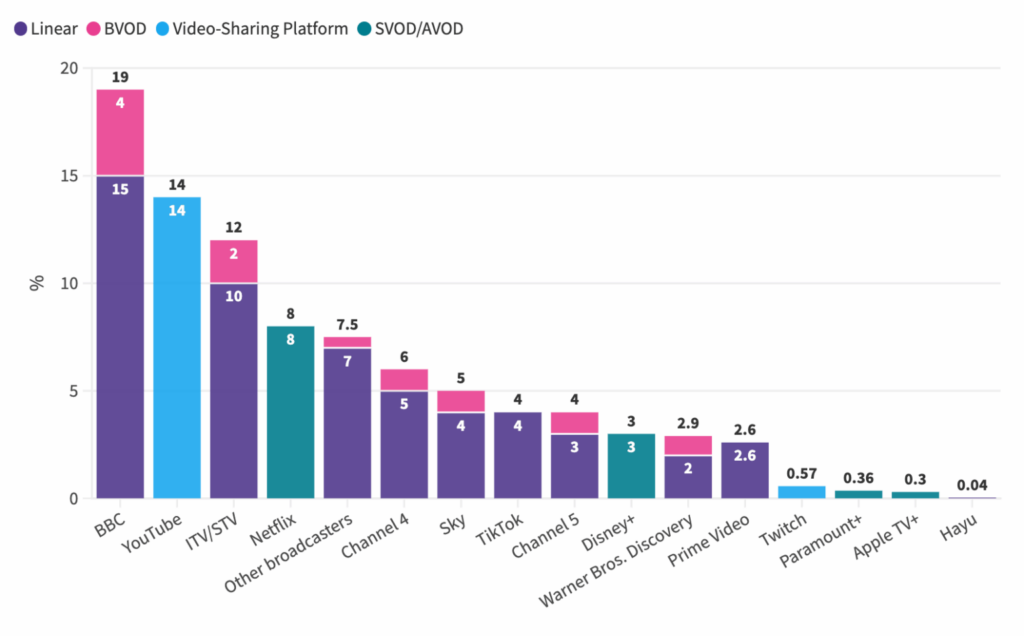
In a wide-ranging interview, Samanidis revealed that iPlayer viewing figures are now ‘twice that of Netflix, three times ITVX, and four times that of Channel 4’. However, she emphasized that the goal is not to force a migration but to be where the audience is. ‘We don’t really have a specific target for transitioning people from linear to iPlayer’, stated. ‘Linear still plays a really, really important role… I think iPlayer viewing makes up about 20% of overall BBC viewing, and that’s growing rapidly’.
Content Strategy and Live Events
The platform’s recent success has been driven by a ‘brilliant drumbeat of content’ and a shift in internal strategy where planning is now ‘iPlayer-focused rather than being linear-focused’.
Live events played a crucial role last summer, with a schedule that included Wimbledon, the Euros, the Olympics, Glastonbury, and the general election. The Euro 2024 semifinal set a new record with 20 million accounts signed in to watch.
Samanidis noted that despite losing some rights to Discovery for the Olympics, limiting the BBC to two simultaneous streams instead of multiple ones, viewership actually increased. ‘The engagement in the Olympics was nearly double that of the Tokyo Olympics’, she said, suggesting that a simpler choice architecture may have actually helped audiences navigate the content.
Engaging Younger Audiences
A core part of iPlayer’s mission is retaining younger viewers, a demographic known for consuming less long-form video. Samanidis highlighted the success of shows like The Traitors, which has seen about 10 million viewers tune in, with a quarter of that audience coming from younger demographics.
Similarly, the reality competition Race Across the World saw nearly 70% of its audience in the 16-34 age bracket for its first two episodes last season. The return of Gavin and Stacey also proved to be a juggernaut, reaching nearly 21 million viewers and outperforming Netflix on Christmas Day.
Experiments with Gaming Platforms
To reach younger audiences ‘where they are’, the BBC has been experimenting with presences on gaming platforms like Roblox and Fortnite. This included a surprising move to stream the general election results into a BBC world built within Roblox.
‘We’ve used a lot of our familiar IP and formats… to engage with them off our own platform’, explained, citing a recent live rap battle on Fortnite to promote the show The Rap Game. While data on the success of these specific experiments is not yet public, Samanidis confirmed there is ‘enough evidence to suggest that it’s worth continuing’.
Looking ahead, the strategy is shifting from pure acquisition to retention. ‘Our challenge and our growth opportunity is really around moving people down the funnel to where they’re using iPlayer on a more regular basis’, said.
This involves using major events to hook viewers and then using marketing to guide them to other content. ‘We had a big shift in our marketing focus… looking at retention’, she explained, noting that trails during football matches were deliberately chosen to appeal to that specific demographic to keep them on the platform.