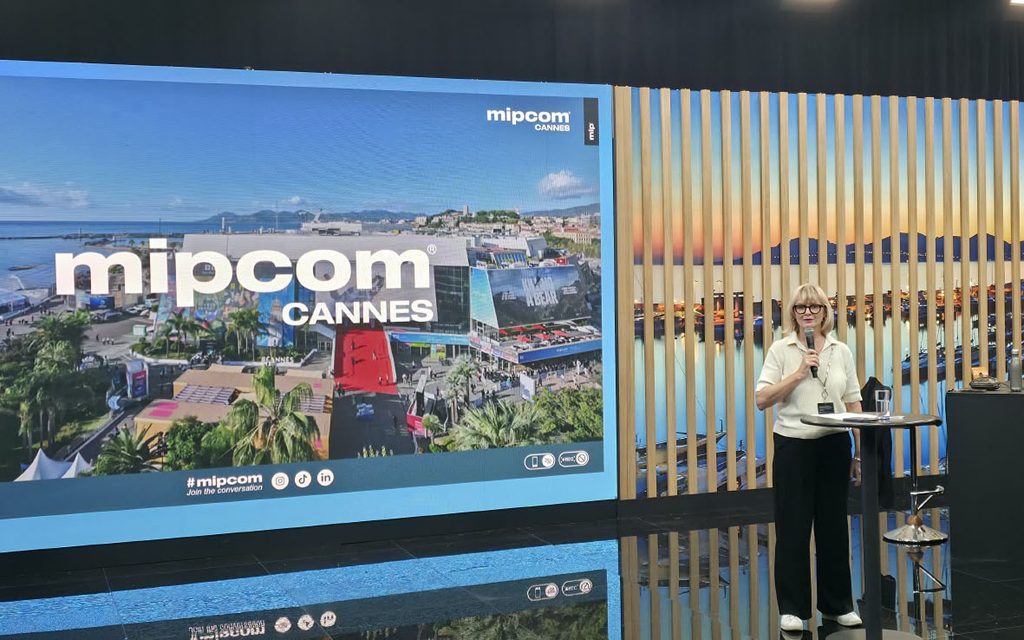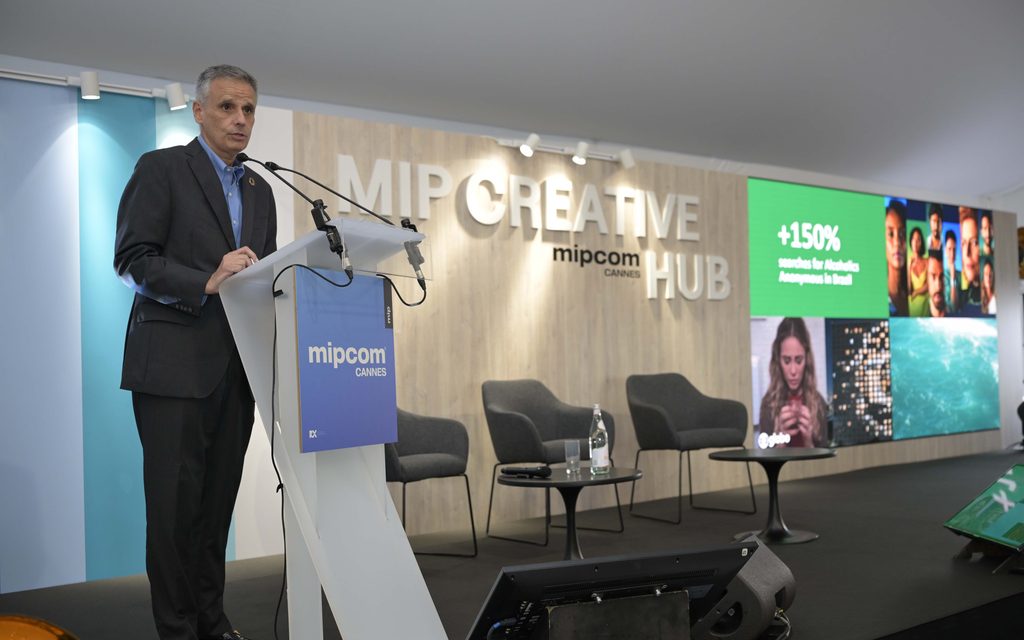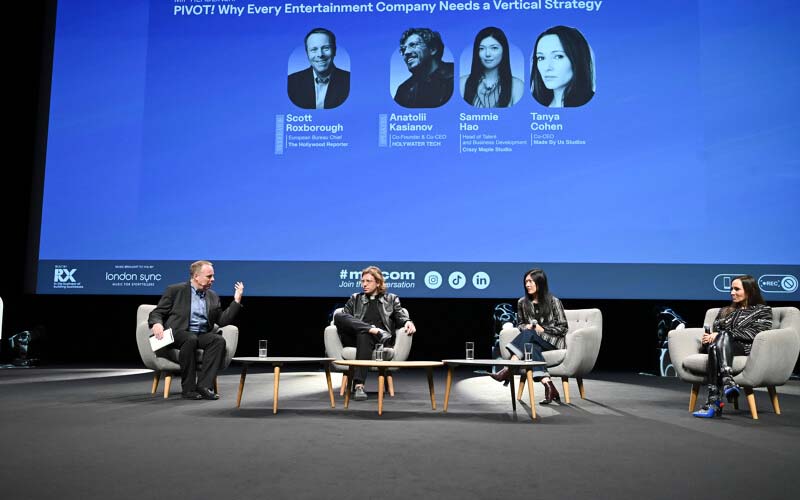
‘Microdramas are no longer a niche curiosity’, said Maria Rua Aguete, Head of Media and Entertainment at OMDIA, at the start of its last conference at MIPCOM Cannes. The executive commented that formats are a $25 billion global phenomenon fundamentally altering the television landscape.
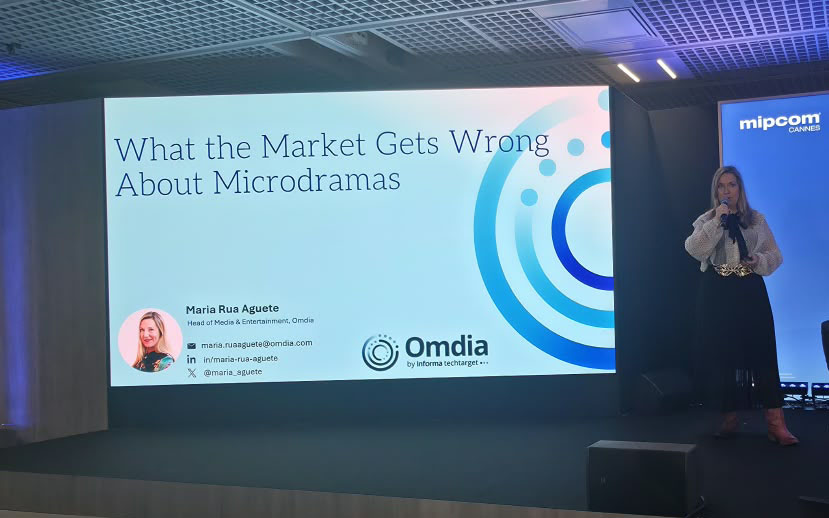
On the session “What the Market Gets Wrong About Microdrama,” Rua Aguete, alongside industry expert Timothy Oh, unveiled exclusive Omdia and Ipsos data proving that the vertical short-form format has evolved into a serious, highly lucrative pillar of the global entertainment economy.
Setting the record straight on the format’s legitimacy, Rua Aguete argued that the rise of microdramas is a direct result of a permanent shift in consumer behavior. ‘There is not a problem with content right now, there is a problem with attention’, she stated, highlighting the industry’s battle for the mobile screen. According to April 2026 data, three out of four US television viewers are simultaneously using their mobile phones in the living room, with 50% of them actively watching vertical videos. This mobile addiction spans all age groups, with platforms like YouTube Shorts currently beating Netflix in the US among audiences aged 18 to 64. Recognizing this shift, major legacy streamers, including Prime Video, Disney+, Max, and Netflix are now aggressively pursuing their own vertical strategies.
Rua Aguete systematically dismantled the industry’s most pervasive myths regarding microdramas, starting with geography. While China currently accounts for 75% of this year’s $14.1 billion microdrama market, the format is exploding globally. The US, Brazil, and Mexico are now leading adopters, followed closely by South Korea. She also highlighted massive growth in Eastern Europe—notably Poland, which boasts double the usage of Spain—as well as robust emerging markets in Latin America and the Middle East. Driven by this international expansion, Omdia officially upgraded its market forecast to a staggering $25 billion.
The session also shattered demographic stereotypes. Often dismissed as a guilty pleasure for female audiences fueled by billionaire-CEO romance tropes, the data paints a vastly different picture. The exec also stressed that nearly half of all microdrama consumers globally are men, a figure that rises to a surprising 54% in the United Kingdom.
Furthermore, the analyst pointed that microdrama is a structural format, not a specific genre. The ecosystem has rapidly diversified beyond soap operas into reality TV, traditional horizontal series being reformatted for vertical screens, and highly popular AI-generated content.
This expansive reach has triggered a gold rush for brand integration and telecom partnerships. Brands are increasingly commissioning microdramas to capture elusive mobile eyeballs, while telecom operators are actively bundling vertical content to drive mobile network usage.
‘Vertical is no longer optional’, Rua Aguete concluded, urging traditional producers and distributors to embrace the format. ‘Microdramas are not a joke, and it’s just getting started’.