| |
Prensario - Sunny Side 2026 Daily Newsletter - June 24 |
|
Sunny Side of the Doc 2026: budget shifts and co-pro rules dominate the day two
|
|
Yesterday, on the second day of the market, the event was centered on the evolving strategies of international buyers, the resilience of public broadcasting amid funding crises, and the urgent need for ethical frameworks regarding generative AI. As traditional financing models shift, the global documentary industry is actively redefining how stories are funded, produced, and distributed for a digital-first audience.
|
|
|
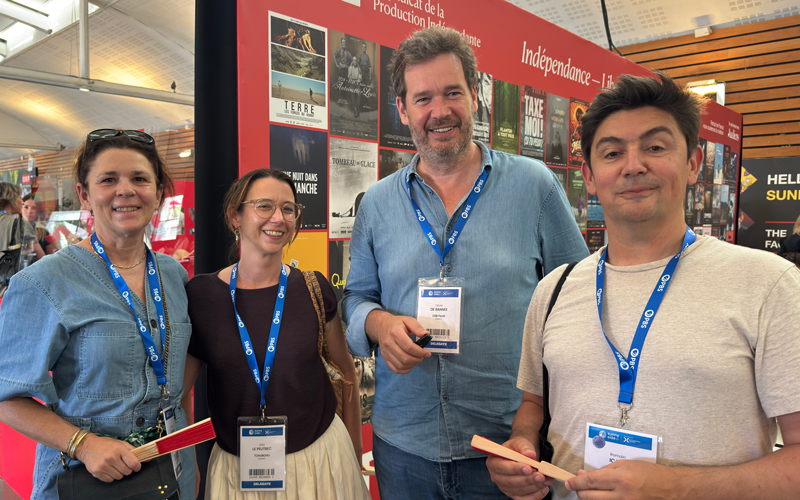
Stephanie Schorter and Elsa Le Peutrec, producers from Tohubohu (France); Olivier De Bannes, producer of O2B Films (France), and Romain Icard producer of Tohubohu (France) |
|
|
|
|
|
A series of three panels brought together nine key international buyers: Isabelle Oliphant (Warner Bros. Discovery), Simon Thedin (SVT), Carolina Tofe (RTVE), Ulrike Brandt (WELT), Christian Hensgens (RTL/ntv), Imke Meier (ZDFinfo), Jo Lapping (BBC), Ben Noot (National Geographic), and Rachel Bailey (Channel 4). The executives discussed their current acquisition strategies and programming priorities.
|
History, science, and engineering remain safe choices across many territories. Noot noted that Egypt and archaeology continue to be top priorities for National Geographic, while Thedin shared that SVT recently acquired a new series centered on Putin. While World War II remains a staple genre, perspectives on its current value diverged; Thedin suggested the topic is becoming ‘a little tired’, whereas Meier indicated that although ZDFinfo is not commissioning such shows at the moment, she anticipates a resurgence in the future.
|
|
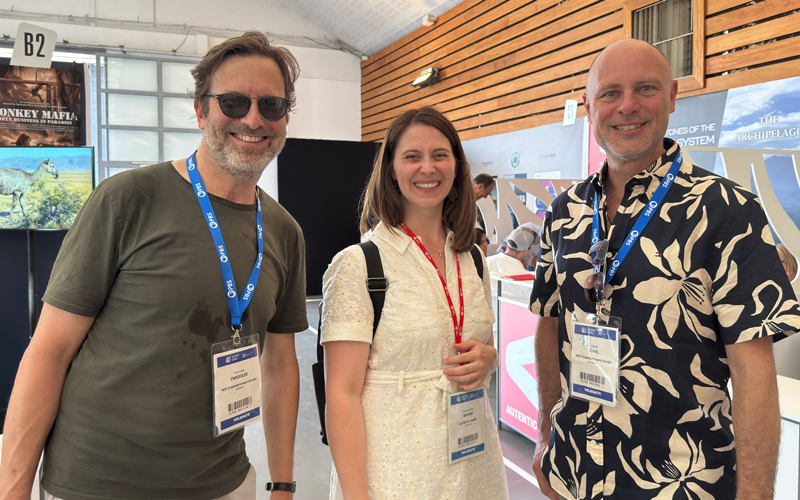
Thomas Zwiessler, Head of Development at NDF Entertainment GMBH, Alexandra Boehm, Head of International Coproduction at Autentic GMBH, and René Carl, Managing Director of NDF Entertainment GmbH (Germany) |
|
|
|
|
|
Notable highlights included Warner Bros. Discovery's documentary marking the Fukushima anniversary, and ZDFinfo's milestone announcement that some of its factual content has surpassed 200 million views on YouTube. The panels reached a consensus on the industry’s defining challenge: identifying localized stories with universal appeal that can seamlessly travel across borders and maintain long-term relevance.
|
This central challenge of preserving a strong editorial identity during turbulent times was also the focus of the "In Conversation with PBS’s Geoff Daniels" session, moderated by Richard Middleton. Daniels revealed that PBS lost its government funding a year ago, resulting in a multi-million dollar deficit. Since then, the network has successfully rebounded through increased individual and foundational donations. He explained that PBS now measures success by ‘reach’ rather than traditional ratings, while continuing to rely on proven formats like "Antiques Roadshow" and historical dramas. His most resonant takeaway of the day was: ‘Just because you can use AI doesn't mean you should’.
|
|
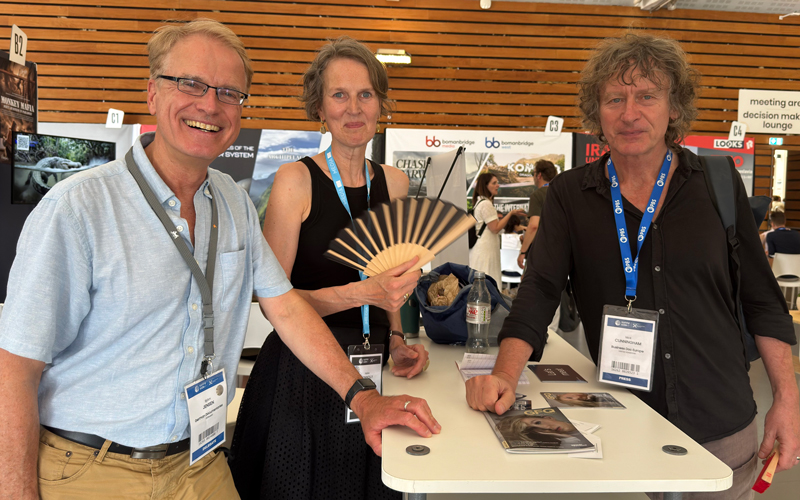
Björn Jensen, Consultant from German Documentaries (Germany); Heike Connolly, General Manager of RM Creative GmbH (Germany); and Nick Cunningham, editor of Business DocEurope (United Kingdom) |
|
|
|
|
|
This cautious approach to artificial intelligence took center stage during the panel "AI Free or AI Made: The New Documentary Grammar?," moderated by Max Salomon. Prominent producers, including Alexandre Péron of Narrative Coders, agreed that AI should be leveraged strictly to visualize what cameras cannot record --such as historical recreations, extended conceptual shots, or extinct wildlife-- rather than replacing authentic footage. Susanne Lummer from Terra Mater Studios highlighted her company's ‘authenticity seal’, emphasizing that they completely bar AI from generating wildlife imagery, as nature documentary audiences reject synthetic content. Additionally, Jean-Christophe Caron (ZDF/ARTE) cited a survey of 3,000 German visual artists, noting that 56% expressed anxiety over job displacement due to AI technologies.
|
|
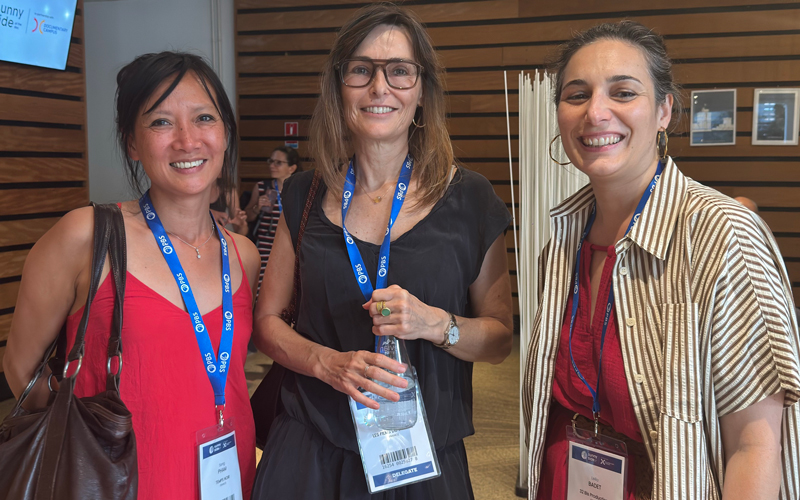
Song Pham, producer of Temps Noir (France); Sylvie Brenet, producer of Les Films du Sillage (France); and Leïla Badet, producer of 32 Bis Productions (France) |
|
|
|
In response to these shifts, ARTE is currently drafting a new regulatory framework anchored by four main pillars: a justified editorial reason must exist for any AI utilization; AI is strictly prohibited in news programming; the technology cannot be used to generate photorealistic depictions of real individuals; and human oversight must verify all AI-assisted content before broadcast.
|
|
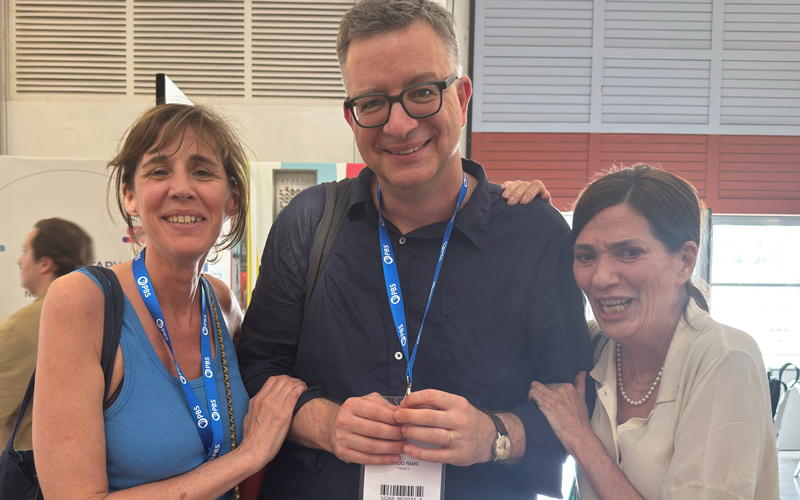
Christilla Huillard-Kann, producer and CEO of Elda Productions (France); Christian Popp, producer of Tanjo Films (France); and Christine Camdessus, Managing and Artistic Director of FIPADOC – Festival International Documentaires (France) |
|
| |
If you want to receive our Daily Reports, please send an email to newsletter@prensario.info with your email and contact details
|
|
This publication has been copyrighted and may not be copied, electronically stored, mailed or faxed without prior written approval. The information may be quoted in internal reports. Prensario Zone must be mentioned as the source. For questions or more information, send an e-mail message to: newsletter@prensario.info | © 2026 Prensario International
|
|
|