The Japanese broadcaster outlined its investment in Hollywood, new production joint ventures, and the 360-degree monetization of unscripted formats to establish “J-Content” in the international market.
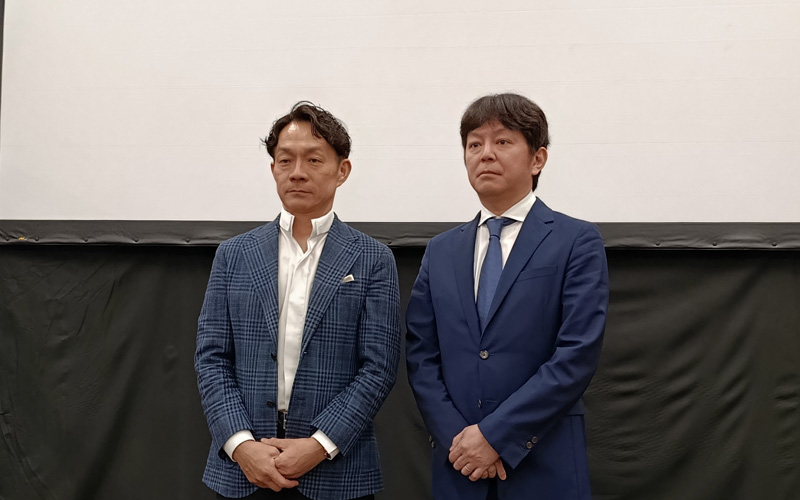
At TIFFCOM in Tokyo, Japanese broadcaster TBS presented its operational roadmap to transition from a domestic network into a global intellectual property powerhouse. Executives detailed a $150 million strategic investment in Hollywood’s Legendary Entertainment, a new production joint venture with South Korea’s CJ ENM, and the evolution of legacy unscripted formats into comprehensive 360-degree brands. The overarching goal is to elevate Japanese live-action productions into a recognized global genre, moving beyond the traditional reliance on domestic linear TV ratings.
Strategic Alliances in Hollywood and South Korea
Central to TBS’s global push is its recent $150 million equity stake in Legendary Entertainment. Kazuhiro Setoguchi, Global Business Executive and President of The Seven US, explained that the partnership addresses a structural challenge in Hollywood. While U.S. studios are eager to adapt Japanese manga, anime, and games into live-action features, they often struggle to navigate relationships with local IP holders.
“Legendary recognized that TBS, with its long history of producing live-action dramas and building strong relationships with publishers and creators, could act as a cultural translator,” Setoguchi noted. To accelerate co-development, TBS is embedding personnel directly into Legendary’s Los Angeles offices for two-year rotations, integrating them into the Hollywood studio’s creative and operational workflows.
In the Asian market, TBS announced the creation of Studio Mono, a joint venture involving South Korean entertainment giant CJ ENM and domestic streaming platform U-NEXT. This entity aims to combine TBS’s IP development capabilities with CJ ENM’s global production standards to create premium content for international distribution.
The Seven: High-End Production Beyond Broadcast
To execute these global projects, TBS is leveraging its specialized production studio, The Seven. Built independently of traditional broadcast constraints, the studio focuses entirely on high-end content for global streaming platforms. The Seven is currently providing production support for the third season of Netflix’s Alice in Borderland and has a slate of upcoming large-scale projects aimed at the international market, including partnerships with prominent creators.
Setoguchi reflected on the urgency of these initiatives by comparing Japan’s current position to South Korea’s trajectory. Recalling a co-production in 2002, he noted that Korean crews eagerly absorbed Japanese technical knowledge because they were mandated to expand globally as a national policy. “For over 20 years, we in Japan chased daily real-time domestic viewership, while South Korea aimed for the world from the start,” Setoguchi said. “Today, K-Content is a globally established genre. J-Content has not yet reached that status. We must acknowledge this reality and work collectively to open the market.”
360-Degree Format Monetization: From Sasuke to Kasso
On the unscripted front, Shinya Odanari, Global Business Director at TBS, detailed the ongoing expansion of Sasuke, known internationally as Ninja Warrior. Approaching its 30th anniversary, the format has been localized in 25 countries. The U.S. version recently concluded its 18th season, while local adaptations in Vietnam, Israel, and Australia are currently being revived.
Odanari emphasized that the future of format sales relies on 360-degree IP expansion rather than just broadcast rights. Ninja Warrior has expanded into experiential businesses, including 14 indoor parks in the UK, similar facilities in Germany and the U.S., extensive merchandise lines, and a VR game slated for release in late 2025. Furthermore, an obstacle racing discipline inspired by the format has been officially added to the Modern Pentathlon for the 2028 Los Angeles Olympics.
TBS is also applying this digital-first, multi-platform strategy to new IPs. Kasso, a recently launched skateboarding entertainment format, was designed from inception as a global street culture IP. Without relying on traditional TV broadcast as its primary driver, it has rapidly amassed over 1.2 million social media followers—90% of whom are based outside of Japan—and has already secured international events and apparel collaborations.
Industry Collaboration and Next Steps
To support its expanding catalog, TBS is decentralizing its sales operations. In addition to existing hubs in Los Angeles and Seoul, the company is establishing a new presence in London in partnership with ATS to drive format sales across the European market.
During the Q&A session, executives addressed the structural challenges of exporting Japanese content, noting the fragmentation of Japanese companies at international markets like MIPCOM. Setoguchi stressed the need for an “All Japan” approach and advocated for stronger government support to subsidize distribution and production costs. “The goal is not to fight for a slice of the existing domestic pie, but to build a new global market from zero,” he concluded, affirming TBS’s commitment to investing in the infrastructure required to make Japanese live-action content a daily choice for international audiences.