Here we are at another edition of ATF, Asia’s leading content event, particularly for the APAC region, organized by RX Global. Just over a month ago, we attended MIPCOM in France, the world’s leading content meeting point. What is the first thing we can say about making the most of ATF? The industry is so turbulent, with constant changes and deep uncertainty surrounding the future of main revenue sources, that most players have adopted a cautious stance: few announcements, sticking to safe bets and, above all, ‘waiting for things to clear up’. Though, those doing best are precisely the ones who are not waiting…
Without a doubt, the market is full of change and uncertainty. Around MIPCOM alone, two major mergers took place: Paramount and WBD under Skydance, and Banijay took control of All3Media. Many expect the first to be a different kind of merger, since Skydance is an investment group that aims to keep the various brands separate and operating independently. Its principal investor is the Ellison family, led by billionaire Oracle co-founder Larry Ellison, who, with his son David at the helm, secured USD 46.7 billion in financing. They see this as the project of their lives and will at least try to avoid the usual outcome, where 1 + 1 ends up being less than 2 — often much less.
The content business today resembles a coin with two sides: on one, the traditional sector is trying to absorb rising costs while revenues decline; on the other, the digital sector is seeking to monetize new initiatives and restore healthy revenue levels. New times, old problems. The good news is that the industry has powerful new tools to meet these challenges: YouTube, AI, microdramas, and more. Asia, in particular, is one of the regions developing these opportunities fastest and most effectively. ATF 2026 promises to be very active in high-end innovation initiatives.
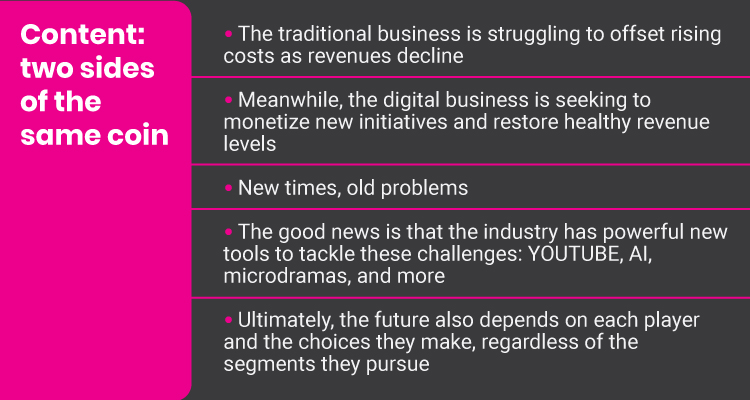
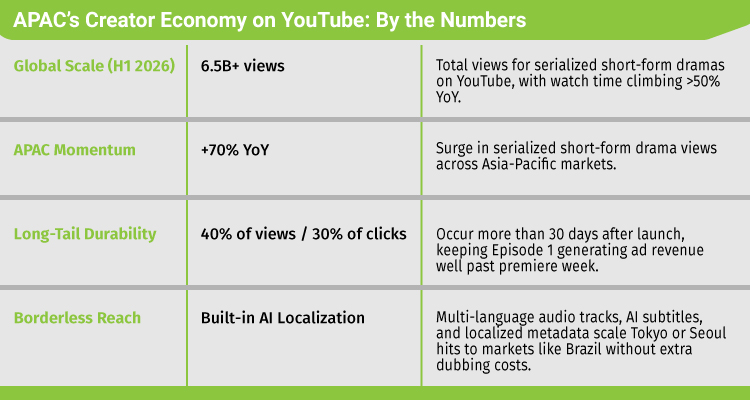
Beyond that, the future also depends on each player. The market is full of competitors who started from the same place, and today one is struggling and lamenting the decline of traditional television, while the other is thriving and growing thanks to a series of sound decisions. Independent film distributors are a telling example: those doing well now handle films on an all-rights basis, expand into new regions, establish production hubs in different countries and already derive 40% of their revenues from YouTube.
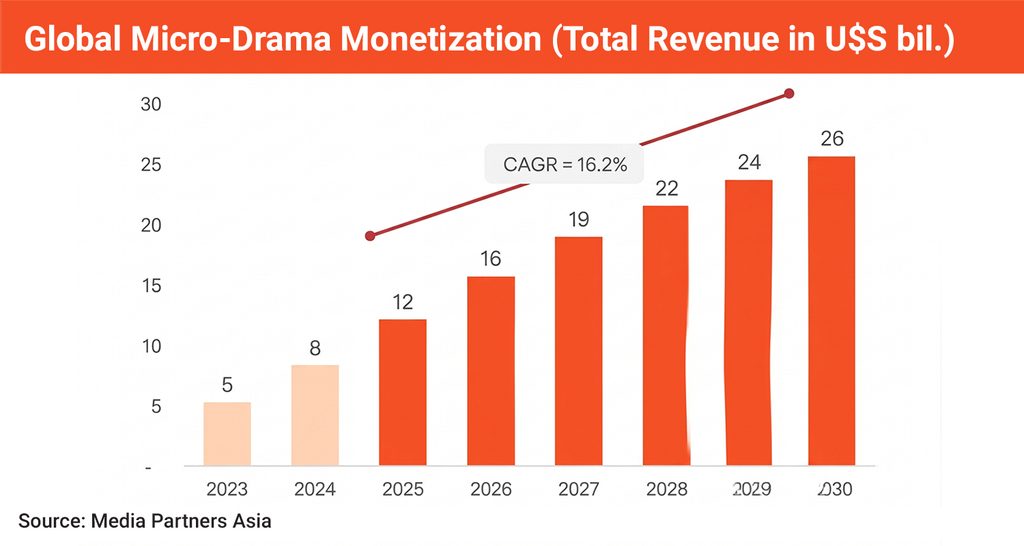
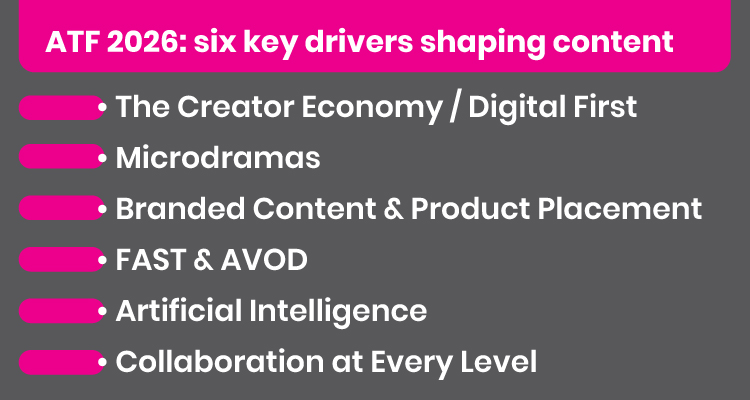
Six clear drivers are shaping the business today. First, the Creator Economy, with YouTube leading a powerful Digital First movement and establishing new rules for digital media. APAC is a prime example. Second, microdramas: Asian apps are becoming increasingly global, while more and more major players are investing in the segment. Once again, APAC — China and South Korea in particular — is leading the global market. Third, branded content, a key way to offset declining productivity in productions and an increasingly common component of projects of every kind.
Fourth, FAST & AVOD, the most direct route for traditional players to enter the digital space and generate new revenue streams. Fifth, artificial intelligence, a cross-industry boom with the potential to reverse negative business indicators and boost performance across every area. Once again, Asia is at the forefront. And sixth, collaboration at every level: in the new market, no one can go it alone. Co-productions, multi-platform premieres, rights-sharing, more diverse content origins, and more. APAC is now far more open than it was a decade ago to cross-border and cross-regional developments.
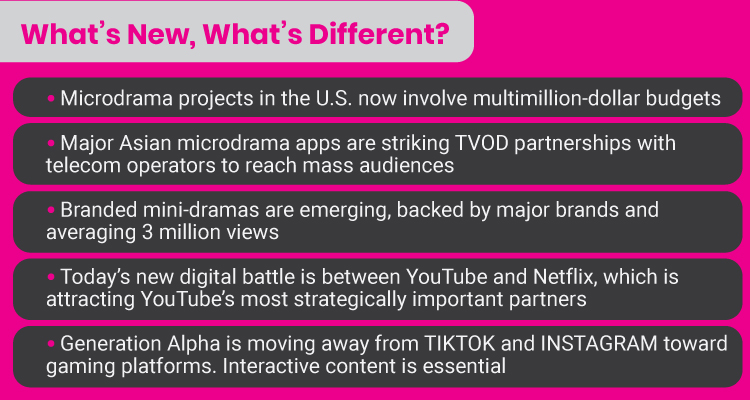
What is new or different since MIPCOM? Take microdramas, for example. Roy Ashton, a partner at U.S. agency Gersh, said that this fall in Los Angeles, a production company agreed to pay USD 2.5 million for a total of 40 minutes of vertical microseries, with episodes running just two to five minutes each. Investment in the segment is gaining momentum…
Sammie Hao of ReelShort and Timothy Oh of COL, two major Asian microdrama apps, agree that the strongest strategy today is to form TVOD partnerships with telecom operators to drive mass traffic. Both have announced agreements with Thailand’s telecom operator AIS, for example. ReelShort is also producing branded mini-dramas — for instance, eight one-minute episodes — with brands such as Crocs, achieving striking results: 10 million views, three times the usual figure.
Jack Ojalvo, CEO of Copyright Capital (a major YouTube partner and investment fund for digital projects), always offers surprising insights. At previous markets, he discussed the battle between YouTube and TikTok, arguing that the former is unbeatable for videos watched on television, while the latter leads in mobile e-commerce and transactions. What is his view now? That the new battle is between YouTube and Netflix, because YouTube’s main revenues come from a very small number of players, and Netflix is seeking to identify them and bring them onto its own platform — with strategic successes already achieved in recent weeks. In a sense, the traditional market is fighting back against the digital one.
Meanwhile, David Keeman, CEO of British consultancy Dubit, which specializes in young audiences, said at MIPCOM that Generation Alpha is moving away from algorithm-driven social networks such as TikTok and Instagram — currently considered the leading platforms — and toward gaming platforms, which have become its main “third space” after home and school. To succeed from now on, producers will need to build interactive, participatory worlds that invite children to live inside their stories. APAC is one of the world’s biggest hubs for interactive programming.
What makes Dubit’s observation particularly interesting is how quickly everything changes in the digital world. By the time content executives get used to doing business with TikTok, it may already be too late, and the industry may need to move on to the next format — perhaps these gaming platforms, which are booming across APAC. One key point raised by many analysts is the need to pursue media that keep users consistently engaged. Compare games with microdramas: a hit in the latter category can be short-lived, after which producers have to win audiences over all over again.
Perhaps the future will require a different way of managing the ecosystem as a whole, with content at its center and positive momentum carrying audiences across different media and platforms. Of course, that can happen relatively easily with a massive hit, but hardly at all with independent titles. One final point: at least in the medium term, the “future” is already taking shape through today’s emerging platforms. So it is essential to surround yourself with knowledgeable young people, adapt quickly and focus on generating concrete revenues soon — rather than becoming complacent or overly theoretical. Above all, do not wait for things to clear up.
Nicolás Smirnoff