Netflix continues to expand its educational partnerships in South Korea, collaborating with the Korean Film Council (KOFIC) and the Korean Academy of Film Arts (KAFA) to train and support the local screen industry. Past November 10, its Korea’s Director of Production, Jungsu Ha, and Content Manager, Kijae Kim, addressed 120 students and industry professionals at the Korean Film Archive Cinematheque as part of the KAFA+ program, detailing the streamer’s production methodologies and creative strategies.
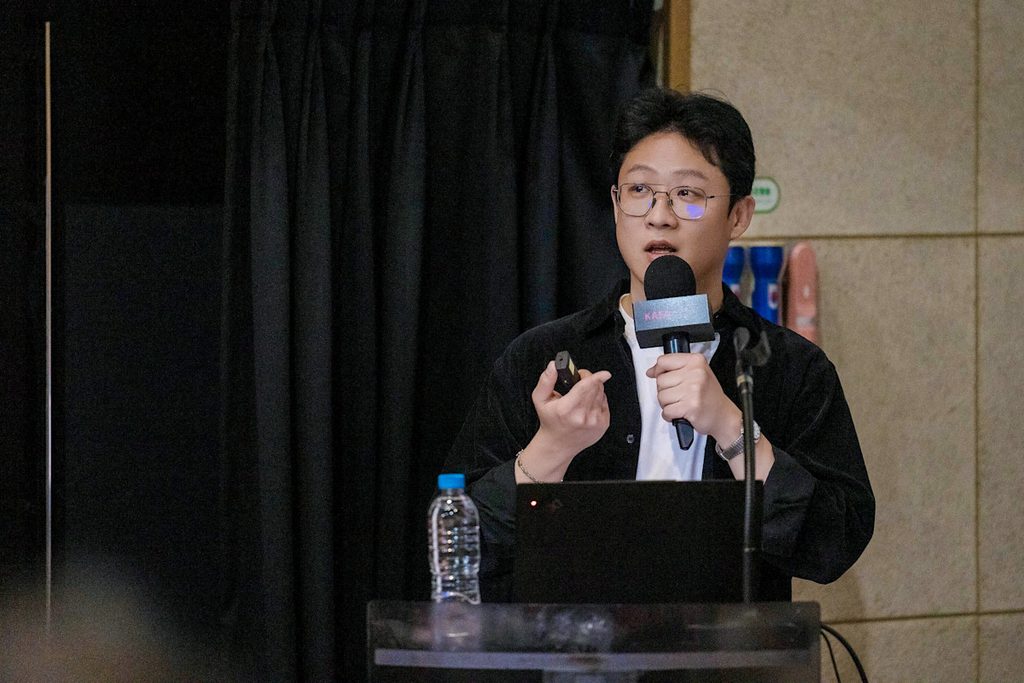
A central theme of the session was Netflix‘s «local for local» approach to development. Kim emphasized that the most globally successful Korean titles—such as the military drama D.P.—resonate internationally specifically because they remain deeply rooted in domestic realities rather than pandering to overseas markets.
‘That’s why “local for local” matters. It means starting with the stories Korean creators tell best and Korean viewers love to watch’, Kim explained, noting that between 2016 and 2025, the streamers partnered with over 80 Korean production companies to deliver more than 200 local titles, generating employment for tens of thousands of cast and crew members.
Beyond creative development, Netflix highlighted its commitment to safe, technologically advanced production environments. Ha commented the company’s onboarding procedures, which include pre-shoot «Respect» sessions to establish on-set safety protocols, alongside advanced pre-production planning. Utilizing examples like the Dolby Vision and Atmos integration in Okja and the pre-visualization of the tug-of-war sequence in Squid Game, Ha demonstrated how early technical decisions optimize budgets and enhance storytelling.
The executives also focused on the importance of mindset and continuous learning for emerging filmmakers. ‘Curiosity is the most important quality a creator can have’, Ha stated during the closing discussion moderated by pop culture columnist Taehoon Kim. ‘The drive to keep asking questions and exploring new possibilities is what makes great work possible’.
These knowledge-sharing sessions are part of a broader talent development infrastructure Netflix has established in the region. Through initiatives like the Grow Creative program launched in 2024 and the KOCCA × Netflix Production Academy, the company is actively bridging the gap between training and employment. A recent VFX training program run with the Korea Radio Promotion Association saw approximately 70% of its 330 graduates secure industry jobs, with many directly contributing to major Netflix productions like the upcoming seasons of Squid Game.
‘Working with Netflix has given us the opportunity to share experience in developing and producing titles for global audiences, along with practical knowledge Korean filmmakers can use in their own work’, a KOFIC representative stated. ‘We hope this program helps filmmakers broaden their creative horizons. We’ll continue working with industry partners to expand training opportunities for the next generation of filmmakers’.