Nine countries signed the new Council of Europe Convention on the co-production of audiovisual works in the form of series today at the Series Mania Forum in Lille. France, Georgia, Greece, Italy, Luxembourg, Malta, Montenegro, Poland, and Portugal became the first signatories of the treaty, which establishes the first international legal framework dedicated specifically to the independent co-production of television and streaming series. The agreement is designed to create shared rules that strengthen cross-border cooperation, support independent producers, and introduce greater transparency to an international market increasingly reshaped by global platforms. To officially enter into force, the treaty requires three ratifications, including at least two from Council of Europe member states.
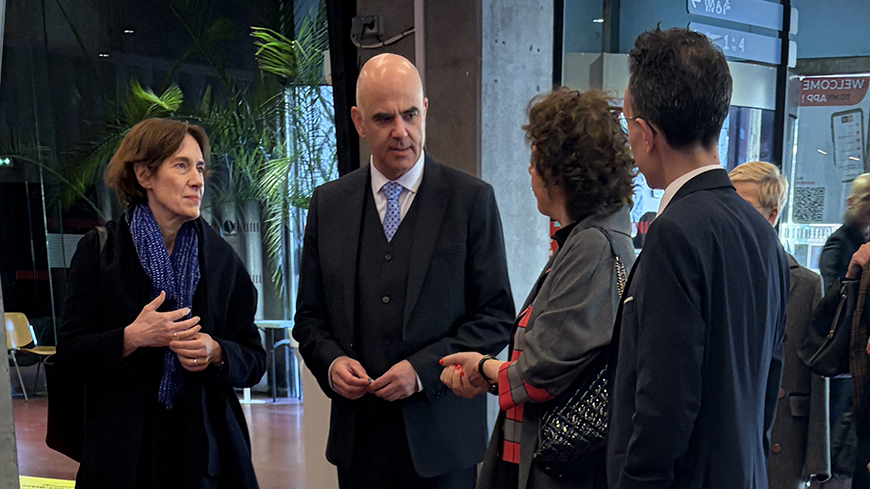
During the signing ceremony and his subsequent address at the Lille Dialogues summit, Council of Europe Secretary General Alain Berset urged the remaining member countries to adopt the treaty. Berset positioned the framework as a necessary structural measure to safeguard diverse European storytelling and pluralistic narratives against rapid market concentration and the growing pressure of disinformation. Emphasizing the convention’s role in equipping European creators to navigate a volatile information space, Berset stated that the treaty will better establish the position of independent producers in a market dominated by non-European players, against a backdrop of economic models dictated by algorithms.
Berset also drew direct parallels between the new series framework and the established Council of Europe Convention on cinematographic co-production, highlighting how formal structural support can lead to international commercial and critical recognition. He cited the recent Oscar win for Joachim Trier’s film Sentimental Value—which was developed within the cinematographic framework and supported in part by Eurimages—as an example of the global acclaim such regulatory models can facilitate. Berset noted that the emerging series convention is intended to foster similar conditions for television projects, enabling European productions to achieve comparable levels of visibility and success.
Concluding his remarks at the market’s closing summit, the Secretary General framed the new convention as a strategic signal for the future resilience of European audiovisual production. He stressed that the initiative serves as a reminder that the region’s sector is most effective when policymakers, creators, public service media, and industry entities align their efforts to support independent cross-border creation.